The Centre for Genomic Regulation is participating in a new European research initiative that will explore why some wild African suid species can withstand African swine fever (ASF) while domestic pigs succumb to the disease within days.
Dr. Cedric Notredame’s research group will contribute through their expertise in high-throughput bioinformatics and comparative genomics to help shed light on one of the most urgent threats to global animal health
The project, ASF-RESIST, brings together leading groups in animal health, immunology, genomics and virology with the shared goal of identifying the biological factors that allow species such as warthogs, bushpigs and red river hogs to survive ASF.
Understanding this natural resilience could pave the way for better tools to protect domestic pigs, which die rapidly after infection and whose vulnerability has already caused devastating economic losses worldwide.
In China alone, the 2018–2019 epidemic led to the loss of an estimated 300 million pigs, costing over one billion US dollars. Europe has battled repeated outbreaks since the virus re-entered the continent in 2007, and the threat remains persistent. Just days ago, authorities confirmed a new ASF case in a wild boar near Barcelona, highlighting the need for deeper scientific insight and improved prevention strategies.
“The recent detection of African swine fever near Barcelona is a stark reminder that this virus is always at our doorstep. Understanding why some wild suids can carry the virus without getting sick is essential if we want to prevent future outbreaks, protect local biodiversity and safeguard farmers’ livelihoods,” says Dr. Notredame, researcher at the Centre for Genomic Regulation.
Studying pigs without using pigs
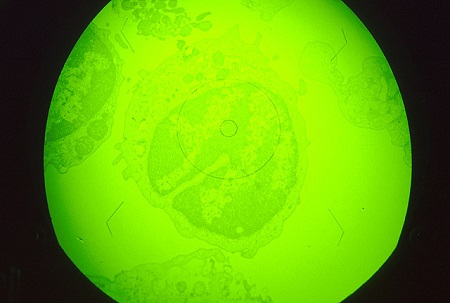
Because ASF targets immune cells called macrophages, the ASF-RESIST consortium will use a pioneering stem-cell platform to study the disease without using live animals.
The researchers have generated induced pluripotent stem cells from both domestic pigs and resistant wild African suids, which can be grown in the laboratory into macrophages, the very cells the virus infects.
These lab-grown cells will allow scientists to safely compare how each species detects and responds to the virus. For example, the team can expose the macrophages to ASFV, observe how effectively they sense the infection, measure which immune genes switch on and to what extent, and identify the genetic factors that either block or support viral replication.
Using advanced experimental and imaging tools, the project will catalogue the antiviral mechanisms active in resistant species and then test these genes one by one to pinpoint which can stop the virus.
The discoveries made through this approach could reveal new antiviral pathways, help identify genetic markers for breeding more resilient pigs, and inform future strategies to protect herds against ASF.
The CRG will support the project by analysing the large amount of RNA-sequencing data generated by the consortium. Dr. Notredame’s team will use computational tools to compare how different pig species respond to the virus at the molecular level, helping identify the genes and pathways that make some animals resistant and others vulnerable.
Notredame’s group is well known for creating tools used worldwide in genomics research, including Nextflow, a system that allows scientists to run complex analyses reliably and at scale, and T-Coffee, a widely used method for comparing DNA and protein sequences.
The ASF-RESIST consortium is coordinated by INRAE (France), led by Dr. Ferdinand Roesch. The project’s partners include Dr. Finn Grey and Dr. Tom Burdon at the Roslin Institute at the University of Edinburgh and Dr. Christopher Netherton at the Pirbright Institute (UK).
ASF-RESIST is funded through the European Partnership on Animal Health and Welfare (EUPAHW), which operates under the European Union’s Horizon Europe research programme. The project is set out to start on December 15th, 2025.
Image: Macrophage cell in early stages of infection with African swine fever virus, magnified about 1,000x. Credit: USDA Research at the Plum Island Animal Disease Center

La mejor actitud que podemos adoptar es la de trat...

The research team observed changes in head circumf...
AtCDF3 gene induced greater production of sugars a...
En nuestro post hablamos sobre este interesante tipo de célula del...
Un estudio liderado por la Universidad de Sevilla y el Centro de Inves...