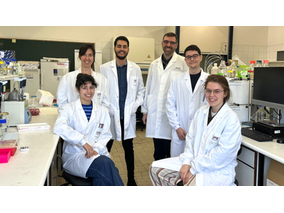
UAB researchers have produced the most complete map of the bacterial essential interactome, i.e. how proteins combine and interact to perform functions essential for their survival.
Read more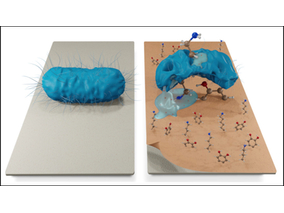
It has been developed an innovative material to fight against the spread of pathogens, infections and antimicrobial resistance inspired by the substances secreted by mussels to adhere to rocks, it can...
Read more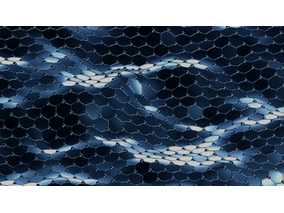
A study published in Nature Nanotechnology presents an innovative graphene-based neurotechnology with the potential for a transformative impact in neuroscience and medical applications.
Read more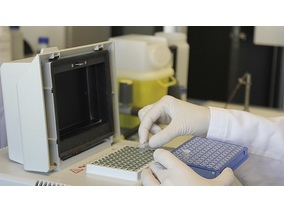
The UAB has launched a new campaign to raise funds to study a gene therapy for adenylsuccinate lyase deficiency (ADSL), a rare genetic disease suffered by about 80 children in the world, including two...
Read more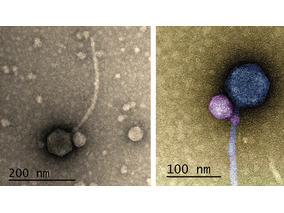
It has been identified an unprecedented viral association in which a virus latches on to the “neck” of another virus to enter its host organism and begin replicating its genetic material.
Read more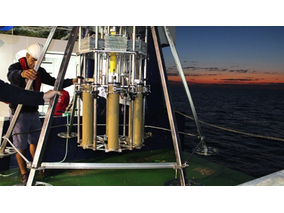
It has beed assessed the impact of CO2 -induced changes in the Mediterranean Sea on foraminifera, a particular group of calcifying planktonic organisms.
Read more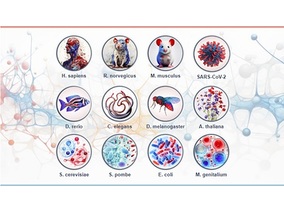
The new resource, A3D-MOBD, brings together the proteomes of twelve of the most studied model organisms which cover distant biological clades and contains over half a million predictions of protein re...
Read more
The information we perceive from movement travels from the inner ear to areas of the brain called the vestibular nuclei, which play an important role in motion sickness. Researchers from the UAB Insti...
Read more
IBB-UAB researchers have developed a second-generation molecule that significantly improves the stabilization and aggregation inhibition of the proteins involved in Transthyretin Amyloidosis (ATTR), a...
Read more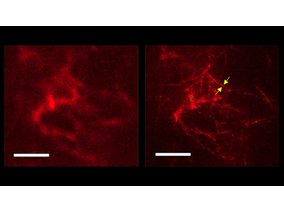
It has been combined STED microscopy, a technology that allows super-resolution visualization, and a new antibody recently created to observe the amyloidogenic aggregates characteristic of Alzheimer's...
Read more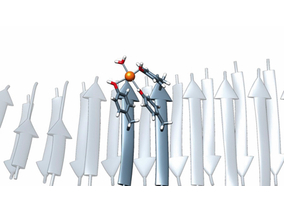
UAB researchers have developed minimal nanozymes with the capacity of capturing carbon dioxide (CO2) emitted in industrial processes and applicable to other environmental remediation processes, based ...
Read more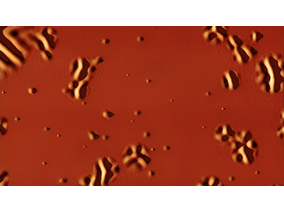
Researchers from the UAB and the ICN2 have developed a methodology that makes it possible for the first time to observe under the microscope, in real time, what happens when glass is heated and change...
Read more
La mejor actitud que podemos adoptar es la de trat...

The research team observed changes in head circumf...

AtCDF3 gene induced greater production of sugars a...

En nuestro post hablamos sobre este interesante tipo de célula del...
The direct analysis of human heart tissue from transplant recipients w...