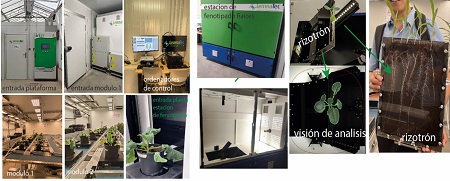
The CBGP has a new cutting-edge scientific infrastructure, the Enclosed Ecosystem Phenotyping Platform (E2P2), an automated and robotic system for the phenotyping of plants grown in different environmental conditions. E2P2 has been installed in the greenhouse space of the CBGP Plant Cultivation Laboratory and has been funded with grant EQC2021-006897-P
The new CBGP plant phenotyping platform (E2P2) represents the first of this type installed in a Spanish public research center. The platform allows phenotyping both the aerial part and the roots of plants. E2P2 is a versatile system, and can be used on small model plants, such as Arabidopsis thaliana, or on larger crops such as tomato or corn, among others. The platform will operate under P1 biological safety conditions so that genetically modified organisms (plants and microorganisms) (GMOs) can be analyzed and phenotyped and the effect of these modifications on different genetic traits of agronomic interest can be compared with those observed in wild-type plants and microorganisms.
The E2P2 robotic phenotyping system has motorized pot transport lines, with smooth movement and reduced vibration. This system of motorized transport lines allows the automatic transport of potted plants from the plant storage/cultivation area in the two modules of the greenhouse to the station, where images and parameters of the plants are taken, and allows the return of the plants to the same greenhouse modules. The system consists of 2 pot conveyor rails per greenhouse module and allows the coupling of pots with a plant (including pot) of 700 mm high by 500 mm diameter and total weight of material (plant, pot, soil and water) per pot up to 7 kg. The system transports the pots to the phenotyping station (dark module of the platform) where the sensors and cameras are located to take images, parameters and data of the plants to be phenotyped. This dark module of the platform is located in the central corridor between the modules, and consists of automatic locks to allow entry and exit of the module floors automatically according to the programming carried out in the platform control system of phenotyping.
The aerial phenotyping stations (image capture systems and control software) have cameras, lighting systems and sensors, as well as a 360º rotating plate for taking images at all angles and from the top. The high quality camera lens guarantees optimal quality of the plant images. Image sensors have high light sensitivity. The lighting system is capable of taking images of plants in different spectral bands.
E2P2 also has a root phenotyping system that takes reproducible images of plants thanks to an image sensor with high light sensitivity and high contrast resolution. It allows you to analyze images of roots grown in soil and other plant growth media such as transparent agar plates.
E2P2 has a powerful, versatile computer system (and associated software) that allows the control of phenotyping of both the root and the aerial part of the plant, and the supervision of all installed hardware components, including cameras, lighting and the automation robotics of the plant transport lines to the phenotyping station and the dark module of the platform. During an experiment all data are stored in the central database and transformed into FAIR (Findable, Accessible, Interoperable and Reusable) format, thanks to the experience of CBGP researchers in this field of metadata storage and processing. E2P2 allows you to program a complete experiment, with repeated tasks or specific experiments by manually loading pots into the phenotyping station for measurement in the dark module of the platform. Control of the equipment can be monitored remotely by the operator.
The new infrastructure also allows to simulate different agroecological conditions in the two modules equipped with precise mechanisms to regulate temperature, humidity and lighting without depending on the external climatic conditions of the Montegancedo Campus where the CBGP is located. This infrastructure will allow us to advance our knowledge of the molecular biology and physiology of plants and understand the interaction of plant roots with the soil and its microbiota.
Infrastructure supported by Ministerio de Ciencia e Innovación / Agencia Estatal de Investigación / 10.13039/501100011033 and European Union NextGenerationEU/PRTR
About the Center for Plant Biotechnology and Genomics (CBGP, UPM-INIA)
The Center for Plant Biotechnology and Genomics is a joint research center of the Technical University of Madrid (UPM) and the National Institute of Agricultural and Food Research and Technology (INIA), that is a National Centre integrated in the Spanish Research Council (CSIC).
Its strategic objectives are the generation of knowledge on the genetic and molecular bases of key biological and physiological processes of plants and the organisms that interact with them, as well as the genomics of plants and these organisms. The Center also aims to develop new Computational Biology and Synthetic Biology tools for the functional analysis of plants and microorganisms.
CBGP researchers are grouped into four research areas: Plant Development, Plant-Environment Interaction, Computational and Biosystems Biology and Genomics, and Synthetic Biology and Bioengineering. The center has a remarkable translational biology activity (CBGP-Solutions program) in the innovative ecosystem of the Montegancedo-UPM Campus of International Excellence. This technology transfer activity has allowed the creation of 4 technology-based companies and the development of new products and processes for the productive sectors of the national and international bioeconomy.

La mejor actitud que podemos adoptar es la de trat...

The research team observed changes in head circumf...
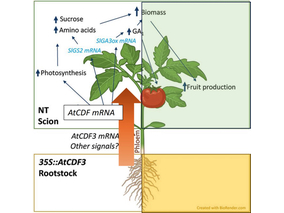
AtCDF3 gene induced greater production of sugars a...
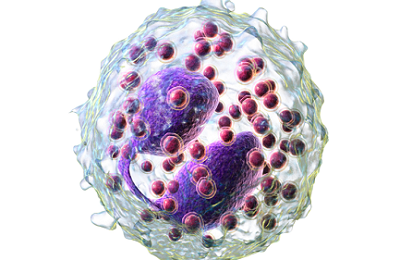
En nuestro post hablamos sobre este interesante tipo de célula del...

Telum Therapeutics, a biotechnology company leveraging proprietary met...