Plastids, the defining organelles of plant cells, undergo physiological and morphological changes to fulfill distinct biological functions. In particular, the differentiation of chloroplasts into chromoplasts results in an enhanced storage capacity for carotenoids with industrial and nutritional value such as beta-carotene (pro-vitamin A). Here, we show that synthetically inducing a burst in the production of phytoene, the first committed intermediate of the carotenoid pathway, elicits an artificial chloroplast-to-chromoplast differentiation in leaves. Phytoene overproduction initially interferes with photosynthesis, acting as a metabolic threshold switch mechanism that weakens chloroplast identity. In a second stage, phytoene conversion into downstream carotenoids is required for the differentiation of chromoplasts. Our findings reveal that lowering the photosynthetic capacity of chloroplasts and increasing the production of carotenoids are not just the consequence but an absolute requirement for chromoplast differentiation, which additionally involves a concurrent reprogramming of nuclear gene expression and plastid morphology for improved carotenoid storage.
https://www.biorxiv.org/content/10.1101/819177v1.full
Briardo Llorente, Salvador Torres-Montilla, Luca Morelli, Igor Florez-Sarasa, Miguel Ezquerro, Lucio D’andrea, Eszter Majer, Adrian Troncoso, Alisdair R. Fernie, José A. Daròs, Manuel Rodriguez-Concepcion

La mejor actitud que podemos adoptar es la de trat...

The research team observed changes in head circumf...
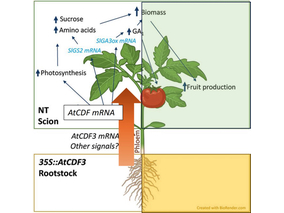
AtCDF3 gene induced greater production of sugars a...
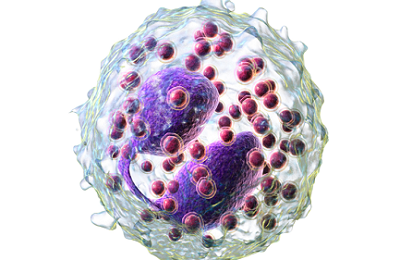
En nuestro post hablamos sobre este interesante tipo de célula del...

Telum Therapeutics, a biotechnology company leveraging proprietary met...