Researchers from the Institute of Biotechnology and Biomedicine and the University of Warsaw present Aggrescan4D (A4D), a new version of their computational method Aggrescan that allows analysing and predicting protein aggregation by taking into account pH. The update improves the usability of the algorithm and makes it one of the most comprehensive tools available today for understanding, predicting and designing solutions to specific protein aggregation problems.
Protein aggregation is a multifactorial process driven by the intrinsic properties of proteins and is strongly influenced by environmental factors. This phenomenon is behind the emergence of proteinopathies, highly debilitating diseases with serious implications for human health. Moreover, it imposes limitations on the development and implementation of protein-based biotechnological and biomedical applications, such as enzymes or monoclonal anticoagulants.
Despite the importance of protein context in understanding aggregation, environmental variables have generally been ignored in the analysis and prediction of this complex process. In a new study published in Nucleic Acids Research, researchers from the IBB's Protein Folding and Conformational Diseases research group present a new tool that includes the effect of pH on protein aggregation when proteins are in their native structure. This is Aggrescan4D, an extended version of the Aggrescan and Aggrescan3D (A3D, with nearly 1,500 combined citations) algorithms previously developed by the researchers.
"We have made our algorithm sensitive to changes in pH and this improved the prediction process. In addition, since Aggrescan has been used in protein design, we have created a new automatic protocol to modulate the propensity of proteins to aggregate by altering their sequence with changes that are evolutionarily conserved and therefore should not greatly affect the functionality of the protein", explains Salvador Ventura, IBB researcher from the Department of Biochemistry and Molecular Biology who led the research.
The A4D version integrates precomputed results for the nearly 50,000 jobs in the A3D model organism database, as well as the retrieval of structures from the AlphaFold database, which opens the tool to the study of more than 200 million proteins automatically. In addition, it presents significant improvements in the usability of the Aggrescan algorithm by incorporating more functionalities and an intuitive interface that allows to study the results obtained in a simple way.
Among the users for which Aggrescan4D could be of greatest interest is the pharmaceutical industry, due to the potential to minimise the enormous costs associated with the process of protein redesign and solubilisation, a key concern in drug development.
“Our extensive comparative assessment of prediction accuracy, along with the other software features, has shown A4D to be the leading tool for protein aggregation analysis and engineering, further highlighting its practical relevance and potential”, the researchers conclude in their study.
Aggrescan4D's web service and its extensive documentation are available free of charge without registration at https://biocomp.chem.uw.edu.pl/a4d/
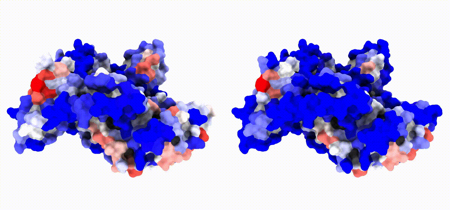
Image: Representation of A4D results for BSA (bovine serum albumin) protein at pH 4.0 (left) and pH 7.0 (right). Thanks to the coloration included in the web service, users can study the regions with the highest propensity to aggregate (in red), and analyze how different pHs can reduce it (acquiring bluer shades when the protein is more soluble). In this case, the protein is more soluble at pH 7.0 than at pH 4.0.
Original article: Oriol Bárcenas, Aleksander Kuriata, Mateusz Zalewski, Valentín Iglesias, Carlos Pintado-Grima, Grzegorz Firlik, Michał Burdukiewicz, Sebastian Kmiecik, Salvador Ventura, Aggrescan4D: structure-informed analysis of pH-dependent protein aggregation. Nucleic Acids Research 2024, gkae382, https://doi.org/10.1093/nar/gkae382

La mejor actitud que podemos adoptar es la de trat...

The research team observed changes in head circumf...
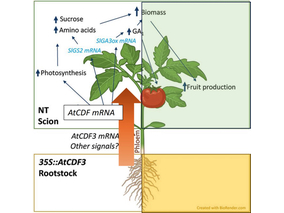
AtCDF3 gene induced greater production of sugars a...
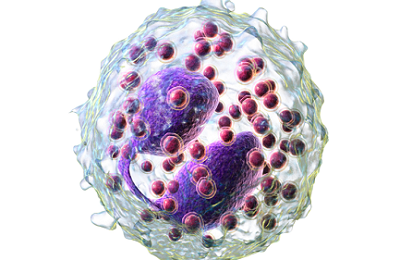
En nuestro post hablamos sobre este interesante tipo de célula del...
The direct analysis of human heart tissue from transplant recipients w...