
A multi-omic study conducted at Cima Universidad de Navarra rules out the role of immature cells in resistance to cancer treatment. These results will help improve the accuracy of diagnosis and follow-up for patients with tumors such as multiple myeloma and primary systemic amyloidosis.
“For decades, it has been speculated that the presence of cancer stem cells is responsible for relapses in patients who achieve complete remission following cancer treatment. Therefore, their characterization is key to achieving greater efficacy and proper treatment monitoring, although it poses a scientific challenge due to cellular heterogeneity and variability among patients,” explains Dr. Bruno Paiva, principal investigator of the Translational Immunomics in Hematological Neoplasms Group at CIMA Universidad de Navarra and director of the study.
This multi-omic study by the Cancer Center Clinica Universidad de Navarra used single-cell sequencing and highly sensitive flow cytometry to integrate the genomic and phenotypic profiles of the most immature and most differentiated cells in these patients. “We demonstrated for the first time that, although immature B lymphocytes share some characteristics with tumor plasma cells, they lack the genetic structure necessary to drive the progression of tumors such as multiple myeloma and light-chain amyloidosis.”
In the scientist’s view, “by ruling out the involvement of the most immature cells in tumor progression, we can prioritize therapeutic targets aimed at plasma cells over others aimed at B lymphocytes, such as CD19,” adds Dr. Paiva.
False positives
As explained by Carmen González, a predoctoral researcher at CIMA and the study’s first author, “these genomic alterations are detected primarily in tumor plasma cells, and very rarely in immature B cells sequenced during treatment. Further analysis suggests that these B cells may sporadically lead to a ‘false positive’ result for minimal residual disease. Our results conclude that, if this type of B cell is detected during treatment, it does not imply a higher risk of relapse.” The results have been published in the scientific journal Blood Cancer Discovery.
The study, conducted within the framework of the Spanish Myeloma Group (GEM/PETHEMA) and the CIBERONC Cancer Research Network, received public funding through the Carlos III Health Institute and support from social and private institutions such as the Spanish Association Against Cancer, the CRIS Foundation Against Cancer, and the Riney Family Foundation, among others.
Bibliographic reference: Blood Cancer Discovery. March 11, 2026.
Genetic evidence against the notion that clonotypic B cells serve as a reservoir for plasma cell cancers
Image: Dr Bruno Paiva and PhD student Carmen González, lead authors of the study

La mejor actitud que podemos adoptar es la de trat...

The research team observed changes in head circumf...
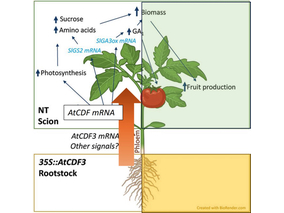
AtCDF3 gene induced greater production of sugars a...
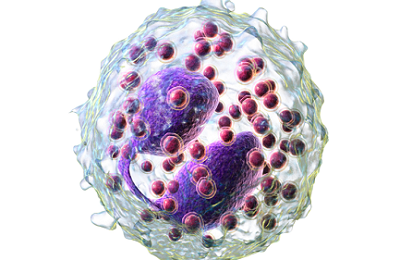
En nuestro post hablamos sobre este interesante tipo de célula del...

Telum Therapeutics, a biotechnology company leveraging proprietary met...