
Researchers from Clínic-IDIBAPS have participated in an international study published in The New England Journal of Medicine (NEJM), which demonstrates that tezepelumab, a biological drug, significantly reduces the size of nasal polyps and improves symptoms in patients with severe chronic rhinosinusitis with nasal polyps.
The trial is the first to show clinical effects from the fourth week of treatment, maintained for up to 52 weeks.
Dr. Joaquim Mullol, head of the Rhinology Unit and the Smell Clinic of the Otorhinolaryngology Service at Hospital Clínic and leader of the Clinical and Experimental Respiratory Immunoallergy group (IRCE) at IDIBAPS, is the only Spanish participant in the study.
What is chronic rhinosinusitis with nasal polyps?
Chronic rhinosinusitis with nasal polyps is an inflammatory disease that affects 1-4% of the population in Western countries. It is characterized by inflammation of the paranasal sinuses and the formation of nasal polyps in the nasal cavities, causing nasal congestion, loss of smell, rhinorrhea, facial pressure/pain, and fatigue.
These symptoms are chronic as they persist for more than 12 weeks and are often associated with asthma and/or intolerance to aspirin/non-steroidal anti-inflammatory drugs.
Currently, treatment includes nasal corticosteroids, saline irrigations, courses of oral corticosteroids, and sinonasal surgery, although many patients fail to control the disease.
Improvement from the fourth week
The phase III WAYPOINT trial, sponsored by AstraZeneca and Amgen, included 238 people with moderate-to-severe chronic rhinosinusitis with nasal polyps uncontrolled with standard therapies. Participants received tezepelumab, a subcutaneous injection every 4 weeks, or placebo, for 52 weeks. The drug works by blocking the TSLP (thymic stromal lymphopoietin) protein, which is a key molecule in the inflammation associated with this disease.
The study results show that tezepelumab achieved a significant reduction in the size of nasal polyps compared to placebo, as well as in the need for oral corticosteroids and sinonasal surgery. Patients treated with the drug experienced a very notable improvement in symptoms such as nasal congestion and loss of smell, as well as in their quality of life.
One of the main findings of the study is that the beneficial effects were observed from the fourth week of treatment, which represents a significant advance compared to other existing biological therapies.
The safety profile of tezepelumab was comparable to that of placebo, with generally mild adverse effects.
Dr. Joaquim Mullol emphasizes that, "these results open up a new option for patients who until now depended on repeated surgeries or oral corticosteroids, with serious side effects. The speed and potency of its action is especially relevant to improve the symptoms of the disease and the quality of life of patients."
Imagen: Dr. Joaquim Mullol, study coauthor.
Study reference: Lipworth BJ, Han JK, Desrosiers M, Hopkins C, Lee SE, Mullol J, Pfaar O, Li T, Chen C, Almqvist G, Margolis MK, McLaren J, Jagadeesh S, MacKay J, Megally A, Hellqvist Å, Mankad VS, Bahadori L, Ponnarambil SS; WAYPOINT Study Investigators. Tezepelumab in Adults with Severe Chronic Rhinosinusitis with Nasal Polyps. N Engl J Med. 2025 Mar 1. doi: 10.1056/NEJMoa2414482.

La mejor actitud que podemos adoptar es la de trat...

The research team observed changes in head circumf...
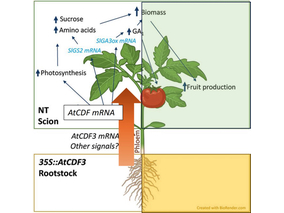
AtCDF3 gene induced greater production of sugars a...

En nuestro post hablamos sobre este interesante tipo de célula del...

Telum Therapeutics, a biotechnology company leveraging proprietary met...