A study led from Lleida shows that chronic kidney disease causes profound changes in lipid (fat) metabolism and accelerates the development of atherosclerosis, one of the main causes of cardiovascular disease. The research, which has been published in the journal Laboratory Animal Research, was carried out using a new experimental model involving 'mini-pigs'. Researchers from the Translational Vascular and Renal Research Group at the Lleida Institute for Biomedical Research (IRBLleida) induced chronic kidney disease in these animals via a minimally invasive procedure and monitored them for over a year using imaging tests and molecular analyses.
"Although rodent models have been useful for studying these processes, they have limitations when it comes to analysing the progression of the disease using imaging techniques similar to those used in humans. To overcome this limitation, this study develops a new experimental model using minipigs, which have a physiology more similar to that of humans," explained the article's first author and UdL professor, Marcelino Bermúdez-López.
The results show that animals with chronic kidney disease develop impaired kidney function and exhibit a much faster progression of atherosclerosis. This leads to increased calcification and larger fatty plaques in the arteries. Furthermore, chronic kidney disease causes changes in inflammation and lipid metabolism.
"This work reinforces the idea that chronic kidney disease is a major cardiovascular risk factor and highlights the importance of identifying early biomarkers that enable the detection and monitoring of disease progression. Furthermore, the results open the door to the development of new therapeutic strategies," added Bermúdez-López.
The research, led by the Institute for Biomedical Research of Lleida (IRBLleida) and the University of Lleida (UdL), involved collaboration with staff from the Carlos III National Centre for Cardiovascular Research, Aarhus University in Denmark, the Canary Islands University Hospital Complex, the University of La Laguna in Tenerife, the University of Extremadura, and the Pere Virgilio Institute of Health Research (IISPV).
The project was funded by the Lleida Institute of Biomedical Research, the Ministry of Science, Innovation and Universities, the Carlos III Health Institute, the European Regional Development Fund 'A Way to Build Europe', and the Lleida Provincial Council.
Article: Bermúdez-López M, Nogales P, Martí-Antonio M, Castro-Boqué E, de Lamo VM, Beà-Menchón L, Luis-Lima S, Porrini E, Sanchez-Salguero X, Jové M, Obis E, Mota-Martorell N, Pérez-Gómez A, Garcia-Carrasco A, Bozic M, Guajardo J, Pérez-Sánchez CJ, Cambray S, Amigó N, Pamplona R, Bentzon JF, Valdivielso JM. Chronic kidney disease induces a distinct lipidomic signature and accelerates atherosclerosis progression in a novel minipig model. Lab Anim Res. 2026 Apr 2;42(1):10. doi: 10.1186/s42826-026-00274-w. PMID: 41928358; PMCID: PMC13045143.
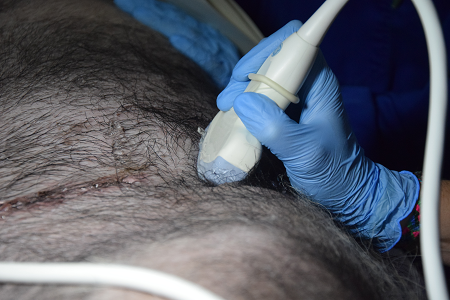
Image: One of the imaging tests carried out at the clinic is an ultrasound scan

La mejor actitud que podemos adoptar es la de trat...

The research team observed changes in head circumf...

AtCDF3 gene induced greater production of sugars a...

En nuestro post hablamos sobre este interesante tipo de célula del...

Telum Therapeutics, a biotechnology company leveraging proprietary met...