A study carried out by professionals from the Bellvitge Health Campus (Catalan Institute of Oncology, Bellvitge University Hospital and IDIBELL), has analysed the use of systemic treatments in patients with advanced chordoma. Chordoma is a very rare bone tumour that appears in adulthood and for which there is no well-defined treatment. Included within the sarcomas group, it is characterized by slow growth but with a high tendency to recurrence.
The work, recently published in the scientific journal Frontiers in Oncology, is based on real clinical practice data and provides new evidence on the clinical activity of immunotherapy and tyrosine kinase inhibitors in the control of this disease.
Chordoma: a rare tumor with poorly defined standard treatments
Chordoma is a type of ultra-rare bone tumour: worldwide, only one case per million people is diagnosed each year. It develops from remains of the notochord (an embryonic structure), inside the spine, mainly in the coccyx or at the base of the skull. As it grows very slowly, it appears during adulthood, being diagnosed mainly between 50 and 70 years old.
In these circumstances, the usual therapeutic strategy is usually the removal of the tumor by surgery, or high precision radiotherapy in patients were going surgery is not a possibility. However, surgery is complex and chordoma is a cancer with a great tendency to recurrence, so it is necessary to explore alternative treatment pathways, such as immunotherapy.
Evaluating immunotherapy as an alternative
The study has included the largest number of cases studied so far in Europe: a total of 13 adult patients with advanced chordoma, diagnosed between 2005 and 2024 at ICO L’Hospitalet, who required systemic treatment after having received surgery and, in many cases, radiotherapy. In these patients, the effectiveness of immunotherapy and other systemic treatments has been evaluated, which could be a promising alternative to surgery.
The results show that, despite the rarity of chordoma and the limited number of cases, systemic treatments can achieve partial responses or prolonged stabilizations of the disease in patients. Both tyrosine kinase inhibitors and immunotherapy showed clinical activity, with prolonged overall survival in this cohort.
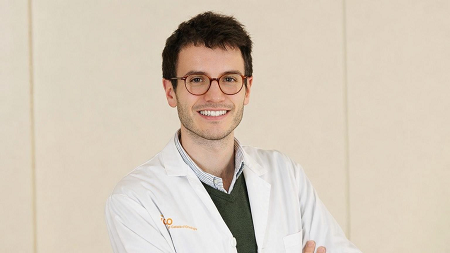
“The objective was to describe what happens in real clinical practice when we systematically treat patients with advanced chordoma, a very rare disease and with few available data”, explains Mario Balsa, medical oncologist at ICO l’Hospitalet and first author of the study. And he adds: “This type of analysis is especially relevant in rare tumours, where each case provides valuable information to guide future therapeutic strategies”.
ICO L’Hospitalet and the Bellvitge Hospital, CSUR reference centers in sarcomas
The study has been developed within the framework of a multidisciplinary approach, with the participation of professionals from Medical Oncology, Surgery, Radiotherapeutic Oncology, Radiology, Pathological Anatomy and Nursing. This collaboration has allowed the integration of healthcare experience with clinical research, a key aspect in the treatment of sarcomas and other rare bone tumours, which require high specialization and close coordination between professionals.
In this sense, it should be noted that the Catalan Institute of Oncology in L’Hospitalet and the Bellvitge University Hospital are reference centers for the treatment of sarcomas and other musculoskeletal tumors in adults. In addition, the Functional Unit of Ossis and Sarcomas Tumors of the ICO l’Hospitalet and the Bellvitge Hospital, a multidisciplinary unit specialized in the treatment of these tumors, was the first created in Spain and is accredited as CSUR, a recognition that guarantees clinical expertise, quality of care and the ability to concentrate high complexity cases.
A study framed in a reference oncological model
This study is part of the collaboration model of the Bellvitge Health Campus, which integrates assistance, research, prevention, and teaching. This ecosystem, based on the joint work of the Catalan Institute of Oncology, Bellvitge Hospital, IDIBELL and the University of Barcelona, has been accredited by the Organization of European Cancer Institutes (OECI) as the Comprehensive Cancer Center (CCC), the highest European recognition for the comprehensive approach to cancer.
On the other hand, the healthcare power of the two hospitals, and the way it is combined with the basic and clinical research of the research institute, allows this work to be aligned with the strategy of REMMA Bellvitge, the first research program in Adult Rare Diseases in Spain. In fact, this initiative is born precisely to promote translational research and precision medicine in highly complex and low prevalence pathologies, such as chordoma, trying to integrate research, care and teaching at the Bellvitge Health Campus and transform the approach to minority diseases of adults by ensuring that the knowledge generated in the laboratory reaches the patient directly.
About IDIBELL
The Bellvitge Biomedical Research Institute (IDIBELL) is a research center created in 2004 and specialized in cancer, neuroscience, translational medicine and regenerative medicine. It has a team of more than 1,500 professionals who, from 73 research groups, publish more than 1,400 scientific articles per year. IDIBELL is participated by the Bellvitge University Hospital and the Viladecans Hospital of the Catalan Institute of Health, the Catalan Institute of Oncology, the University of Barcelona and the City Council of L Hospitalet de Llobregat.
IDIBELL is a member of the Campus of International Excellence of the University of Barcelona HUBc and is part of the CERCA institution of the Generalitat de Catalunya. In 2009 it became one of the first five Spanish research centres accredited as a health research institute by the Carlos III Health Institute. In addition, it is part of the HR Excellence in Research program of the European Union and is a member of EATRIS and REGIC. Since 2018, IDIBELL is an Accredited Center of the AECC Scientific Foundation (FCAECC).

La mejor actitud que podemos adoptar es la de trat...

The research team observed changes in head circumf...
AtCDF3 gene induced greater production of sugars a...
En nuestro post hablamos sobre este interesante tipo de célula del...

Telum Therapeutics, a biotechnology company leveraging proprietary met...