Researchers from the Stem Cells and Cancer team at the Josep Carreras Leukaemia Research Institute and the Hospital del Mar Research Institute have developed a method to confidently produce blood cell precursors from stem cells in mice, by activating a set of seven key genes in the laboratory. The team, led by Dr. Anna Bigas, takes a step forward towards the production of precursor cells able to restore the bone marrow of blood cancer patients, in a successful example of regenerative medicine.
Stem cells can produce any other cell type, it is just a matter of telling them in the right way. From a biological perspective, this means activating the proper genetic programme by pressing the right keys, this is, the right genes, at the right moment. Quite often, blood cancer patients require the replacement of their blood stem cells in the bone marrow, the tissue producing blood cells where their cancer grows. Unfortunately, finding a compatible donor happens to be too challenging sometimes. What if we could produce the cells that make blood in the lab, right from basic stem cells, and use them to regenerate a new and healthy bone marrow?
To do this, you would need to know what genes to activate in a stem cell. In a tour de force, the team led by Dr. Anna Bigas screened thousands of genes in the mice genome to see which were able to transform an embryonic stem cell into a blood precursor or, more technically, a Haematopoietic Stem Cell (HPSC). The screening identified a group of seven genes apparently able to accomplish the task.
In subsequent experiments, the team confirmed that the timely activation of the seven genes was sufficient to transform mouse embryonic stem cells into HSPC, and that these newly produced cells were able to regenerate and sustain a functional blood system, producing all kinds of blood cells, including the immune lineages, in adult mice.
The research has been recently published at the journal Blood, official outlet of the American Society of Hematology, first-authored by Dr. Luis Galan Palma, researcher from the Bigas Lab, in a collaboration with other researchers including Dr. Clara Bueno and Dr. Pablo Menéndez, experts in developmental and paediatric leukaemia, also at the Josep Carreras Institute.
Dr. Bigas is confident that the results obtained in mice can be translated into the human system since, despite the differences, the mechanisms driving stem cells differentiation are so fundamental that are shared between species. As Dr. Bigas points out "we know that those genes are also present in the human genome, and they are highly conserved, this is, their genetic sequences are almost identical". Research is on the way, but chances are they really play the same role in humans as in mice.
This research is a proof-of-concept for the Bigas Lab's ERC synergy-funded project Making Blood, a highly ambitious endeavour to develop a technological platform aimed at the production of human HSPC off the shelf. If successful, we are just a few years away of a new era in the treatment of leukaemia and other blood disorders, based on the long-awaited regenerative medicine.
This research has been partly funded by the Spanish Ministry of Science, Innovation and Universities, Generalitat de Catalunya, and personal grants by "la Caixa" Foundation, Instituto de Salud Carlos III and the Ramón Areces Foundation. No generative AI tools have been involved in the production of this news piece.
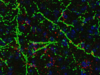
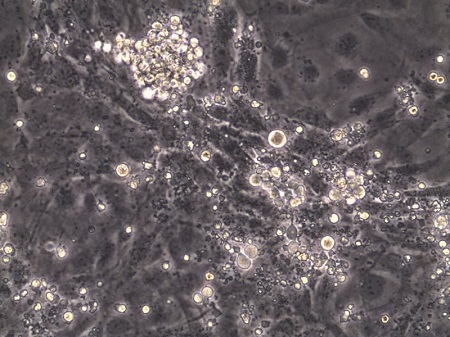
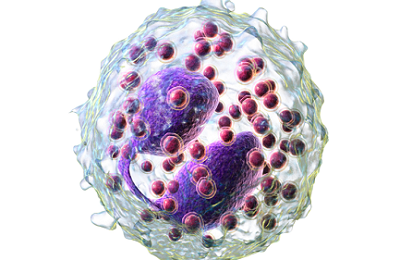
Image: Group of blood/hematological cells obtained in the laboratory from embryonic stem cells.
Reference article: Luis Galan Palma, Gayathri M Kartha, Maria Maqueda, Mercedes Barrero, Eric Canton, Arnau Iglesias, Jessica Gonzalez Miranda, Patricia Herrero Molinero, Raul Torres-Ruíz, Bernhard Payer, Clara Bueno, Pablo Menendez, Lluis Espinosa, Anna Bigas; An unbiased genomewide screen uncovers 7 genes that drive hematopoietic stem cell fate from mouse embryonic stem cells. Blood 2025; blood.2024027742. doi: https://doi.org/10.1182/blood.2024027742

La mejor actitud que podemos adoptar es la de trat...

The research team observed changes in head circumf...
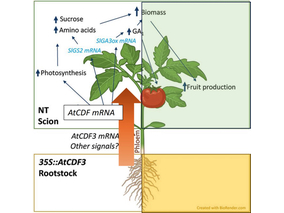
AtCDF3 gene induced greater production of sugars a...
En nuestro post hablamos sobre este interesante tipo de célula del...
Una revisión internacional, publicada en la revista Molecular Cancer,...