Healthcare systems around the world have experienced an unprecedented situation during the COVID-19 pandemic. The sudden increase in admissions, especially in intensive care units, and the need to adapt spaces and protocols led to a profound transformation in the way hospitals work. This resulted in a increase in infections associated with invasive medical devices — like catheters or ventilators — and in one more intensive use of some antibiotics. This new scenario could alter the epidemiology of several bacterial diseases, including those caused by Staphylococcus aureus, one of the most relevant pathogens in the hospital setting and one of the main causes of serious blood infections worldwide.
An international study co-led by the Parc Taulí Research and Innovation Institute (I3PT) has analyzed how this bacterium evolved before, during and after the pandemicThe research compares clinical isolates of Staphylococcus aureus from two hospitals—Parc Taulí and Dartmouth-Hitchcock Medical Center (United States)—collected between 2014 and 2022, with the aim of identifying genetic changes associated with resistance and virulence mechanisms.
A common pathogen, with a great clinical impact
Staphylococcus aureus It is one of the most dangerous bacteria that exist.When it enters the bloodstream, it causes an infection called bacteremia, a serious complication that has an associated mortality of between 15 and 30% of patients who suffer from it and that causes approximately 300.000 deaths per year worldwide.
The research team has analyzed the genomic sequences of a total of 1.144 isolated de Staphylococcus aureus of patients with bacteremia, classified into three stages: before the pandemic, during and after. The results, published in the journal mBio from the American Society for Microbiology, show that the main lineages remained stable over time, even in such an exceptional scenario as the pandemic. However, they were detected alterations in less frequent lineages, as well as genes associated with antibiotic resistance and bacterial virulence factors, with differences between hospitals and periods.
“These changes suggest that some Local factors related to the pandemic, changes in work sequence or the use of antibiotics, may have influenced the genetic characteristics of the bacteria", Explain Miquel Sanchez-Osuna, researcher in the I3PT community and healthcare-associated infections study group and one of the main authors of the study.
In the case of Parc Taulí, during the first months of the pandemic, a increase in some genes associated with resistance to certain antibiotics, coinciding with a more intensive use of these drugs to treat severe cases of COVID-19 in a context marked by therapeutic uncertainty. However, this trend did not consolidate over time. The data indicate that many of these changes were transient and likely linked to specific clinical practices. At Dartmouth-Hitchcock Medical Center, where there was no intensive use of this drug, different patterns were observed, reinforcing the idea that the local context plays a determining role.
Where more sustained changes have been identified is in the bacterial virulence factors, that is, in the mechanisms that allow it to cause infection. The study describes an increase in genes related to the ability to aggregate and adhere to blood components, such as fibrinogen, both during and after the pandemic.
This adaptation could be related to the physiological changes associated with SARS-CoV-2 infection: “Everything indicates that the bacterium has selected mechanisms that allow it to persist better in the organism of these patients and in the hospital setting," he points out Oriol Gasch, infectious disease physician at Parc Taulí and co-head of the I3PT community and healthcare-related infections study group.
The importance of genomic surveillance
The research team believes that These results highlight the extent to which global events can influence the evolution of pathogens..
Beyond the specific case of Staphylococcus aureus, study highlights the importance of maintaining ongoing genomic surveillance"We need to continue monitoring these genetic changes to understand whether they have long-term clinical or epidemiological consequences and to anticipate possible future scenarios," he concludes. Óscar Quijada, co-head of the research group and promoter of the study.
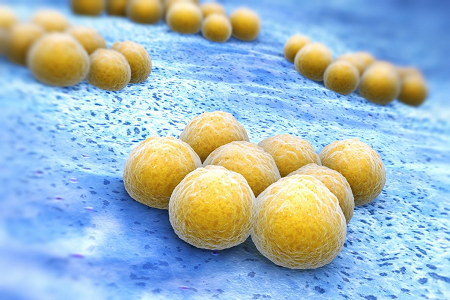
Image: Staphylococcus aureus. SOURCE: CNIO

La mejor actitud que podemos adoptar es la de trat...

The research team observed changes in head circumf...
AtCDF3 gene induced greater production of sugars a...
En nuestro post hablamos sobre este interesante tipo de célula del...

Telum Therapeutics, a biotechnology company leveraging proprietary met...