A team from the Molecular and Cellular Systems Configuration (COSMYC) research group at the University of Extremadura , in collaboration with the Mechanoadaptation and Caveolae Biology group at the National Center for Cardiovascular Research (CNIC), has identified a new molecular regulator, the caveolin-1 protein, which modulates the cell differentiation of basal stem cells into ciliated and secretory cells. The results of this work were recently published in the international scientific journal Scientific Reports .
The respiratory tract is lined with an epithelium that acts as the first line of defense against viruses, bacteria, allergens, and pollution. This epithelium is composed of different cell types, most notably multiciliated cells, which beat their cilia to expel particles, and secretory cells, which produce mucus and hinder the entry of pathogens.
For this barrier to function correctly, maintaining a balance between the different cell types is essential. This balance depends on the ability of basal stem cells to differentiate appropriately into ciliated and secretory cells. However, the molecular mechanisms that control this process are not fully understood, making it difficult to understand what happens when the epithelium is disrupted in respiratory diseases.
The main objective of the study has been to analyze the role of the caveolin-1 protein in the differentiation of basal stem cells of the respiratory epithelium, specifically at the level of the trachea, and its relationship with the Notch signaling pathway, the main molecular route that controls this process.
The study demonstrates, for the first time, that Caveolin-1 is expressed in basal stem cells and multiciliated cells of the respiratory epithelium under in vitro conditions . The absence of Caveolin-1 promotes the differentiation of basal stem cells into multiciliated cells and accelerates their maturation process. Caveolin-1 indirectly regulates the activity of the Notch pathway, decreasing its signaling and thus influencing the final fate of the cells. “The Notch pathway acts as a cellular ‘ switch .’ When it is active, cells tend to differentiate into secretory cells; when its activity decreases, the formation of multiciliated cells is favored,” explained researcher Marcos Olivera Gómez , first author of this study.
Respiratory epithelium, a fundamental barrier to health
Until now, caveolin-1 had been studied mainly for its involvement in various respiratory pathologies, but its role in the cell differentiation process of the respiratory epithelium had never been analyzed.
The results expand our understanding of how the integrity of the respiratory epithelium, a fundamental barrier for health, is maintained. Alterations in this tissue are implicated in diseases such as asthma, chronic obstructive pulmonary disease (COPD), cystic fibrosis, and various respiratory infections, in which changes occur in the structure and function of the epithelium.
This knowledge provides a new foundation for future research focused on respiratory epithelium regeneration and the study of how this cellular balance is disrupted in different pathologies. Furthermore, it opens the door to exploring caveolin-1 as a potential molecular marker in inflammatory processes and respiratory diseases.
Methodology
The study was conducted using in vitro cell models and combined various molecular and cellular biology techniques, including immunofluorescence to localize the caveolin-1 protein in different cell types; chromatin immunoprecipitation to study the regulation of gene activity; and transcriptomic analysis using next-generation sequencing (NGS), which allows for the evaluation of global changes in gene expression. In addition, a bioinformatics analysis of publicly available single-cell RNA sequencing data was performed, confirming the high expression of caveolin-1 in specific basal cell subpopulations.
Bibliographic reference: Olivera-Gómez, M., Cumplido-Laso, G., Benitez, DA et al. Caveolin-1 modulates Notch transcriptional activity during in vitro respiratory multiciliated cell maturation. Sci Rep 16, 9165 (2026). https://doi.org/10.1038/s41598-026-40201-6
Source: Scientific Culture Dissemination Service of the UEx
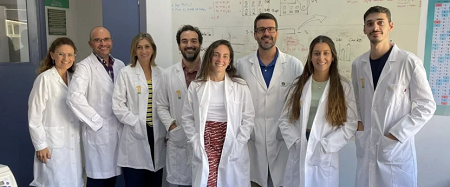
Image: Team of the Molecular and Cellular Systems Configuration Group (COSMYC) UEx

La mejor actitud que podemos adoptar es la de trat...

The research team observed changes in head circumf...
AtCDF3 gene induced greater production of sugars a...
En nuestro post hablamos sobre este interesante tipo de célula del...

Telum Therapeutics, a biotechnology company leveraging proprietary met...