Hepatic stellate cells are responsible for producing fibrosis in the liver. Under normal conditions, these cells remain dormant, but when liver tissue is damaged, they are activated and secrete connective tissue to repair it, leading to the formation of fibrosis.
Now, a study published in Nature involving Ramon Bataller, the head of the IDIBAPS research group Steatohepatitis and liver transplantation, describes that stellate cells are not only involved in fibrosis, but also regulate the function of hepatocytes. They do this by controlling the histological organisation of the liver, its metabolism and its regenerative capacity.
In the study, the research team combined the total genetic depletion of stellate cells with selective depletion of certain genes in these cells to analyse their fibrosis-independent functions. These approaches have allowed us to study the involvement of stellate cells in basic liver functions for the first time and have identified the RSPO3 protein as the main regulator of these functions in stellate cells.
The liver acts as a nerve centre for metabolising carbohydrates, glucose and proteins, as well as for detoxifying endogenous and exogenous substances. These metabolic functions are carried out by means of the liver’s histological organisation, but this structure is lost when stellate cells are eliminated and the expression of the RSPO3 protein is reduced.
Since many of the liver’s functions are essential for life, it has a considerable capacity for regeneration and repair. As the study reveals, this regenerative function also depends on stellate cell activity.
Role of stellate cells in liver disease
The study also shows that in vitro depletion of stellate cells or of RSPO3 protein expression exacerbates alcohol-associated liver disease and steatosis associated with metabolic dysfunction.
Furthermore, in human patients, RSPO3 levels gradually fall in advanced stages of liver disease. ‘This decline suggests a maladaptive process that could contribute to the loss of hepatocyte function and liver damage in the progression of chronic liver disease’, Ramon Bataller explains.

La mejor actitud que podemos adoptar es la de trat...

The research team observed changes in head circumf...
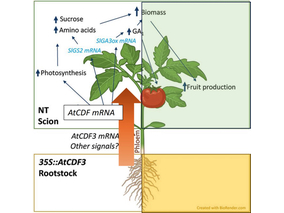
AtCDF3 gene induced greater production of sugars a...
En nuestro post hablamos sobre este interesante tipo de célula del...

Telum Therapeutics, a biotechnology company leveraging proprietary met...