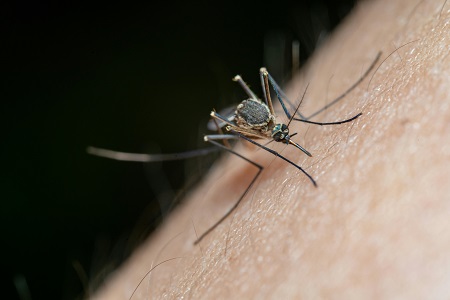
Researchers from the ibs.GRANADA Biosanitary Research Institute have participated in the most comprehensive analysis to date on the factors influencing the transmission of West Nile virus, an emerging mosquito-borne disease that continues to spread in temperate zones, especially in Europe. The study, published in the journal One HealthThis review integrates 23 systematic reviews and meta-analyses and examines more than 1.900 studies to identify the environmental, ecological, and individual determinants that drive the circulation of the virus.
The study is part of the project Off-Oceans for FutureLed by the Faculty of Physics at the Complutense University of Madrid, and developed in collaboration with researchers from ibs.GRANADA, CSIC–Doñana, the Andalusian School of Public Health, and the University of Granada, this multidisciplinary alliance, bringing together expertise in physics, Earth sciences, ecology, conservation biology, health economics, and public health, has made it possible to combine complementary approaches and methodologies to analyze West Nile virus transmission from a comprehensive perspective that connects environmental, ecological, and social processes with direct implications for human health.
The results show that increased temperatures, especially in spring and summer, favor the proliferation of mosquitoes Culex such as viral replication within the mosquito, a process that intensifies after warmer winters. The analysis indicates that extreme events like droughts or heavy rainfall alter ecosystem dynamics, creating environments conducive to mosquito breeding and concentrating birds, natural reservoirs of the virus, around wetlands, increasing the likelihood of transmission to humans when the vectors seek new food sources. Furthermore, changes in land use, including urbanization, agricultural intensification, and ecosystem degradation, are closely linked to mosquito density and virus circulation, with the highest risk observed in irrigated areas, wetlands, and urban environments with deteriorated infrastructure.
The study highlights that socioeconomic factors play a crucial role in vulnerability to this disease. Limited resources, lack of education, and poor risk perception influence the adoption of preventative practices, resulting in greater exposure to the mosquito vector. Certain professional groups, such as agricultural workers, veterinarians, military personnel, and laboratory workers, also show a higher probability of infection due to their outdoor activities or contact with potentially infected animals.
According to the study's lead author, Dr. Clara Bermúdez-Tamayo, researcher in charge of the group E09-Innovation and equity in health services and health policies from ibs.GRANADA, professor at the University of Granada and the Andalusian School of Public Health, “Understanding how climate, territory, ecosystems, and social conditions interact is fundamental to anticipating outbreaks and strengthening surveillance systems. Evidence shows that the One Health approach is not only advisable: it is essential to protect public health from vector-borne diseases such as West Nile virus.".
The authors emphasize the need to develop integrated prevention and control strategies that incorporate environmental information, veterinary and epidemiological surveillance, as well as training and awareness-raising activities aimed at the general public and groups at higher risk of exposure. The study also highlights the urgent need for longitudinal research to better understand the effects of climate change and landscape transformation on the transmission of the virus and other emerging pathogens.
Bibliographic reference:
Vargas Campos, CA, García-Pérez, S., Figuerola, J., Martínez-de la Puente, J., Polo, I., Rodríguez-de-Fonseca, B., Fernández-Álvarez, S., Galván Fraile, V., Martín-Rey, M., Lacasaña, M., & Bermúdez-Tamayo, C. (2025). Comprehensive analysis of West Nile Virus transmission: Environmental, ecological, and individual factors. An umbrella review. One Health, 20, 100984. https://doi.org/10.1016/j.onehlt.2025.100984
About the group
The research group E09-Innovation and equity in health services and health policies The ibs.GRANADA research group works with a multidisciplinary approach to generate relevant knowledge to address emerging challenges in the healthcare system, promoting responsible technological innovation and the implementation of effective policies. Its research areas include health innovation and the adoption of health technologies, the evaluation of health technologies and policies (including migration, climate change, and vector-borne diseases), the synthesis of scientific evidence, and the transfer of knowledge to clinical practice and policy, all with a clear commitment to equity, efficiency, and citizen-centered care.
Further information: https://www.ibsgranada.es/grupos-de-investigacion/e09-innovacion-y-equidad-en-servicios-sanitarios-y-politicas-de-salud/

La mejor actitud que podemos adoptar es la de trat...

The research team observed changes in head circumf...
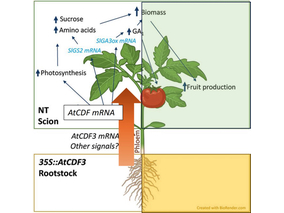
AtCDF3 gene induced greater production of sugars a...
En nuestro post hablamos sobre este interesante tipo de célula del...

Telum Therapeutics, a biotechnology company leveraging proprietary met...