A study led by the University of Granada and the Public University of Navarra has shown that, in overweight or obese adults at risk of type 2 diabetes, good sleep quality is associated with lower glucose levels the next day, while higher glucose levels during the day are associated with worse sleep the night before.
The study shows that sleep and glucose dynamics exhibit a temporal association in real-life situations—not in a laboratory or clinic—in adults at risk of type 2 diabetes. These results indicate that combining sleep and glucose metrics can provide useful information for designing cardiometabolic risk prevention strategies.
The results also show that when daytime glucose levels were higher, participants tended to wake up later, sleep for longer, and have worse sleep efficiency that same night.
The study, published in the magazine Diabetes, Obesity and MetabolismThe study was conducted under real-life conditions with 388 adults, half of them women, who were overweight or obese and at risk of type 2 diabetes. For 14 days, participants wore a physical activity monitor – an accelerometer – and a continuous glucose monitor to objectively measure both sleep and glucose levels throughout the day.
Until now, it was unclear to what extent the quality of sleep one night could affect glucose levels the following day, or how elevated glucose levels during the day could influence subsequent sleep. Antonio Clavero Jimeno, a predoctoral researcher at the University of Granada and first author of the study, emphasizes that “by conducting the study under real-life conditions, we ensured that the results have greater transferability to real-life situations.”
This work is being led by the PROFITH CTS-977 research group of the Joint University Institute of Sport and Health (iMUDS) of the University of Granada, headed by Professor Jonatan Ruiz Ruiz - who is also the group's co-investigator. MP20-Biomarkers of Metabolic and Bone Diseases of ibs.GRANADA-, in collaboration with ibs.GRANADA, the San Cecilio University Clinical Hospital and the Virgen de las Nieves University Hospital of Granada, as well as the group led by Professor Idoia Labayen, from the Public University of Navarra, together with the CIBER of Obesity (CIBEROBN) and the CIBER of Frailty and Healthy Aging (CIBERFES).
The researchers emphasize that, although the observed effects are modest, they could prove significant when maintained long-term, especially in individuals with high cardiometabolic risk. The findings provide useful information for future personalized metabolic prevention and monitoring strategies based on the combined monitoring of sleep and glucose.
Bibliographic references: Clavero-Jimeno, A., Martin-Olmedo, JJ, Migueles, JH, Camacho-Cardenosa, A., Molina-Fernandez, M., Dote-Montero, M., Merino, J., Muñoz-Torres, M., Labayen, I., & Ruiz, JR. (2026). Sleep Efficiency Predicts Next-Day Glycaemia and Daytime Glycaemia Influences Sleep in Free-Living Adults at Risk of Type 2 Diabetes. Diabetes, Obesity and Metabolism.

La mejor actitud que podemos adoptar es la de trat...
The research team observed changes in head circumf...
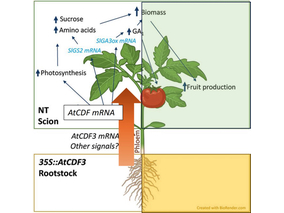
AtCDF3 gene induced greater production of sugars a...
En nuestro post hablamos sobre este interesante tipo de célula del...

Telum Therapeutics, a biotechnology company leveraging proprietary met...