To optimize diagnostic accuracy and promote data protection, researchers at the University of Extremadura have developed a collaborative learning technique called "Federated Learning" that has achieved an accuracy of 89.1%. The results of this research, published in the journal Scientific Reports by Nature, demonstrate the training of artificial intelligence models while preserving data privacy by keeping the data in its original locations, thus ensuring its security.
The model has been trained using images extracted from the International Institute for Collaborative Skin Imaging Studies dataset , which in this case show both identified melanomas and other skin problems.
The identification process involves importing a photograph into a server capable of identifying melanoma and indicating the percentage of reliability. In this way, the tool facilitates the physician's professional decision-making, enabling early detection and saving lives. "Its response time is immediate, no more than a second," notes Sergio Laso , a researcher with the Quercus group and first author of the study.
The federated learning model enhances data privacy when using artificial intelligence algorithms. Each hospital trains its own AI model using only the medical images generated within its facilities. This ensures that patient data is not sent to external servers or shared outside the hospital.
Simultaneously, these images generate a series of mathematical values that are subsequently sent to an external server where all the learning values are compiled. These models are then unified and transformed into a more globalized and reliable one; that is, all the models generated in each hospital are combined without the need to share data, only the learning values. “Let’s suppose a hospital starts from scratch, without images; it doesn’t need to train its own model, because there is already a global model trained with the learning values from the other hospitals,” explains the UEx researcher.
The results of the developed federated models show certain improvements over the more traditional system, demonstrating that their usefulness is the same and they are slightly more effective than other, more centralized systems. Therefore, the researchers propose a future web application designed for medical educators to support the management and processing of information when analyzing diagnoses.
Bibliographic reference: Laso, S., Herrera, JL & Flores-Martin, D. Medical support platform for melanoma analysis and detection based on federated learning. Sci Rep 16, 2571 (2026). https://doi.org/10.1038/s41598-025-32453-5
Source: Scientific Culture Dissemination Service of the UEx

La mejor actitud que podemos adoptar es la de trat...

The research team observed changes in head circumf...
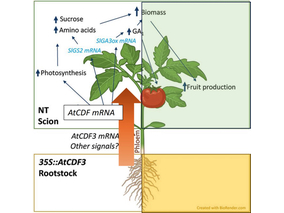
AtCDF3 gene induced greater production of sugars a...
En nuestro post hablamos sobre este interesante tipo de célula del...

Telum Therapeutics, a biotechnology company leveraging proprietary met...