A team of researchers from the Biosanitary Research Institute of Granada (ibs.GRANADA) has achieved significant progress in the treatment of a rare metabolic disease caused by mutations in the gene COQ2. This condition leads to serious clinical manifestations that affect the functioning of the nervous system, kidneys, skeletal and cardiac muscles, among other organs, and usually results in early death due to the lack of effective therapies.
In a study published in Cell Reports, the researchers describe how they generated a mouse model that has the same mutation in the gene COQ2 observed in affected patients. These mice, at birth, show perinatal lethality due to heart failure, edema and delayed neurodevelopment, which mimics the symptoms that occur in patients with the same mutation, who develop feeding problems, generalized edema, seizures and apnea. , resulting in death before six months of age due to mitochondrial disease.
However, the team made up of researchers from ibs.GRANADA, the University of Granada, the University of Strasbourg and the Columbia University Medical Center in New York, discovered that a pharmacological treatment administered to the fathers before conception and to the pregnant mother during Pregnancy, followed by direct administration to the mutant mice after birth, normalizes the cells' ability to produce energy, allowing normal embryonic development and lifespan in affected mice.
This treatment has also been shown to be effective in cells from human patients with the same mutation in the gene. COQ2, substantially improving its ability to produce energy and suggesting its potential applicability in humans.
Dr. Luis Carlos López García, researcher in the MP17-Intercellular Communication group at ibs.GRANADA and author of the study, comments: “These results represent a crucial advance in the treatment of a disease for which there were no effective therapies available until now. Our approach, in addition to improvement in patients affected by mutations in COQ2, could have applications in fertility treatments where there are metabolic difficulties.”
The results of the study have generated great interest in the scientific and medical community, which is why a patent application has been filed to channel this translational potential.
Although the initial focus is on diseases caused by pathogenic variants in COQ2, the research team aims to continue advancing scientific knowledge to explore possible future applications in other disease models.
This study has been funded by the Ministry of Science, Innovation and Universities (PID2021-126788OB-I00), the Ministry of Health of the Government of Andalusia (PEER-0083-2020), the Muscular Dystrophy Association of the United States (MDA-602322 ), the University of Granada through the UNETE Units of Excellence (UCE-PP2017-06), the Margarita Salas and FPU human resources programs.
This important advance in medical research highlights the potential for scientific collaboration to address unmet medical needs and provides hope to patients and families affected by rare and debilitating diseases.
About the group
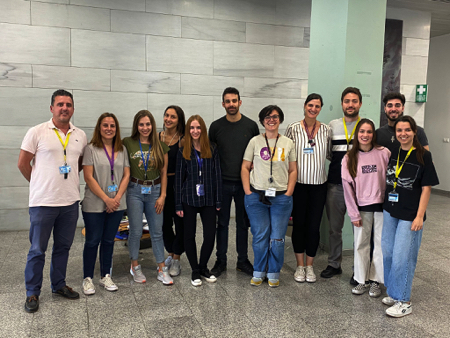
The MP17-Intercellular Communication Research Group is directed by Germaine Escames, professor of Physiology at the University of Granada, with Luis Carlos López, also professor of Physiology at the University of Granada, as PI. The main line of research of the Research Group has been and is the study of mitochondria as a fundamental cellular organelle and as a therapeutic target of melatonin and other compounds in various pathologies. Among them, aging, Parkinson's, sepsis, cancer and mitochondrial diseases have been the Group's fundamental focus. The Research Group stands out for its high productivity and transfer to the productive sector, fundamentally the pharmaceutical industry. The research has been funded by regional, national and international R&D projects, collaborating regularly with leading international groups in their field. The group presents several patents for the treatment of obesity and mitochondrial diseases, as well as new melatonin formulations, having been tested in some cases in various clinical trials and transferred to the pharmaceutical industry. Another, a cream to regenerate the skin for topical application, has been transferred to Pharmamel SL, a Spin-off created by us and with international projection. This group is part of the CIBERFES network, Center for Biomedical Research in Fragility and Healthy Aging Network.
More information about the group: https://www.ibsgranada.es/grupos-de-investigacion/mp17-comunicacion-intercelular/
Bibliographic reference
Corral-Sarasa J, Martínez-Gálvez JM, González-García P, Wendling O, Jiménez-Sánchez L, López-Herrador S, Quinzii CM, Díaz-Casado ME, and López LC. 4-Hydroxybenzoic Acid Rescues the Multisystemic Disease and Perinatal Lethality in a Mouse Model of Mitochondrial Disease. Cell Reports accepted. 2024. https://doi.org/10.1016/j.celrep.2024.114148

La mejor actitud que podemos adoptar es la de trat...

The research team observed changes in head circumf...

AtCDF3 gene induced greater production of sugars a...

En nuestro post hablamos sobre este interesante tipo de célula del...

Telum Therapeutics, a biotechnology company leveraging proprietary met...