A study led by the Girona Biomedical Research Institute (IDIBGI) has discovered a relationship between gut microbiota composition and attention capacity in people with obesity. It is already known that obesity is associated with reduced attention. Now, this study, published in the prestigious scientific journal Gut, is the first to focus on the role of the gut microbiota in this connection.
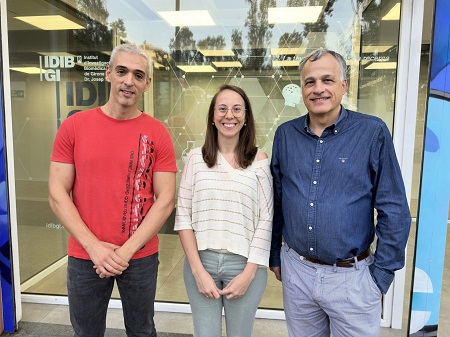
The gut microbiota interacts with our body and performs a wide range of functions: “It is estimated that there are between 20 and 100 times more microbial genes than human genes in our body. Therefore, beyond identifying which microorganisms are present, it is crucial to analyse what they do: their genetic material and the substances they produce or modulate in the organism,” explains Dr. Jordi Mayneris-Perxachs, head of the Integrative Systems Medicine and Biology Research Group at IDIBGI and one of the study’s lead investigators. This microbial activity has a major influence on health and many physiological processes in the human body.
In this research, the team focused on identifying which specific components of the gut microbiota are associated with higher or lower attention capacity. To do so, they analysed stool and blood samples from three cohorts comprising over 1,000 individuals. “To integrate all these data, we applied advanced computational techniques based on machine learning, which allow us to process previously unmanageable volumes of information and gain deeper, high-value insights,” adds Dr. Mayneris-Perxachs.
In an initial analysis of two cohorts, the researchers found that people with obesity and lower attention capacity showed a microbiota with higher levels of Proteobacteria and alterations in tryptophan metabolism. Tryptophan is an essential amino acid obtained through diet and metabolised with the participation of the gut microbiota. This finding led the researchers to further explore the role of tryptophan metabolism. They observed that higher levels of a derived compound, called 3-HAA (3-hydroxyanthranilic acid), were associated with better attention, while other related compounds showed the opposite effect.
To determine whether this relationship could be causal rather than merely associative, the team conducted experiments using animal models. In collaboration with Pompeu Fabra University, microbiota from human donors were transplanted into mice, and the animals receiving microbiota from donors with higher attention capacity displayed signs consistent with better cognitive flexibility and attention.
Furthermore, both a high-fat diet and microbiota depletion with antibiotics reduced 3-HAA levels in mice. Conversely, transferring microbiota from individuals with higher attention levels significantly increased 3-HAA. In fact, after analysing over 600 different compounds in the mice’s brains, 3-HAA was one of the most clearly elevated in response to the transplant.
In another model, the fruit fly, a high-sugar diet that induces obesity —as well as the presence of a specific Proteobacteria species (Enterobacter cloacae)— impaired attention-related behaviours, while supplementation with 3-HAA improved them. “Fruit flies (Drosophila melanogaster) are a very valuable model because they have a simple yet sufficiently complex nervous system to study cognitive functions that share parallels with those of humans,” explains the study’s first author, Dr. Anna Castells, senior researcher at IDIBGI, who adds: “Therefore, the results obtained in flies can provide clues about what happens in our brain and help validate hypotheses.”
“These findings demonstrate that the microbiota plays a key role in producing this metabolite, 3-HAA, which acts as a protector of attention capacity, particularly in individuals with obesity,” states Dr. José Manuel Fernández-Real, head of the Nutrition, Eumetabolism and Health Research Group at IDIBGI and CIBEROBN, Head of the Endocrinology and Nutrition Department at Hospital Dr. Josep Trueta, and Dean and Professor at the University of Girona (UdG), who also co-led the research.
Overall, the study identifies the gut microbiota and 3-HAA as potential targets for improving attention in the context of obesity. However, further studies are needed to confirm causality and explore specific interventions that could be developed at different levels — dietary, probiotic, or others.
This work also involved collaboration from the Pompeu Fabra University, the FISABIO Foundation, CIBEResp, the I2SysBio Institute (University of Valencia – CSIC), and the University of Southampton, among others.
Reference article: Castells-Nobau A, Fumagalli A, Del Castillo-Izquierdo Á, Rosell-Díaz M, de la Vega-Correa L, Samulėnaitė S, Motger-Albertí A, Arnoriaga-Rodríguez M, Garre-Olmo J, Puig J, Ramos R, Burokas A, Coll C, Zapata-Tona C, Perez-Brocal V, Ramio L, Moya A, Swann J, Martín-García E, Maldonado R, Fernández-Real JM, Mayneris-Perxachs J. Gut microbial modulation of 3-hydroxyanthranilic acid and dopaminergic signalling influences attention in obesity. Gut. 2025 Sep 27:gutjnl-2025-336391. doi: 10.1136/gutjnl-2025-336391. Epub ahead of print. PMID: 41015495.

La mejor actitud que podemos adoptar es la de trat...

The research team observed changes in head circumf...
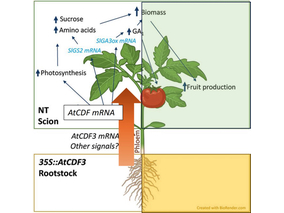
AtCDF3 gene induced greater production of sugars a...
En nuestro post hablamos sobre este interesante tipo de célula del...

Telum Therapeutics, a biotechnology company leveraging proprietary met...