An international study published in Scientific Reports shows that it is possible to predict which individuals will develop mild cognitive impairment or dementia up to seven years before a standard clinical diagnosis. The research developed a biomarker that combines advanced analysis of brain electrical activity with artificial intelligence tools to identify at an early stage the risk of developing this condition in people who do not yet have clinical symptoms but do report subjective complaints.
The work the participation of Rubén Armañanzas, researcher at the Institute of data Science data Artificial Intelligence (DATAI) at the University of Navarra, and was developed in partnership the business BrainScope Company (U.S.), manager technology platform used for processing and analyzing brain signals. The data were previously collected at the Brain Research Laboratory of the New York University School Medicine (NYUSOM). Armañanzas worked alongside the team led by Professor Leslie S. Prichep, scientific director of BrainScope.
“Detecting the risk of dementia in the stages preceding the onset of symptoms is one of the main challenges facing neurology today. This breakthrough represents a step toward more accurate predictive tools that could facilitate early intervention and better clinical monitoring of individuals at higher risk of developing cognitive decline,” notes Armañanzas.
One of the study’s key innovations is that the model trained using data from individuals with subjective cognitive impairment (SCI)—that is, people who notice minor report lapses report still score normally on report tests. As Armañanzas explains, “unlike most current biomarkers, which are applied when objective alterations or structural damage already exist, this approach functional brain signals at an earlier stage, when there is still no clinical diagnosis. This approach explore the possible progression of impairment before obvious structural changes appear.”
In this regard, Prichep emphasizes that “identifying the risk of cognitive decline so early on can have a significant impact on older adults’ brain health, as it provides an opportunity to take action before the damage becomes irreversible and thus improve patients’ future outcomes.”
To achieve these results, the team analyzed the resting brain electrical activity (electroencephalography, or EEG) of 88 older adults with SCI who had been under annual clinical follow-up for between five and seven years. During that period, some participants progressed to mild cognitive impairment or dementia, while others remained stable.
The model the analysis of brain electrical activity with machine learning techniques. Starting with more than 6,000 initial electrophysiological variables, the team identified 14 core topic features primarily core topic to alterations in neural connectivity and in the alpha and theta frequency bands, which are associated in the scientific literature with early neurodegenerative processes.
sample , the system uses eight frontal electrodes instead of the traditional 19-channel setup, which simplifies its potential clinical application and reduces costs and scan times.
“Although the biomarker does not replace clinical judgment, it could become a tool in assessment risk assessment . If the algorithm predicts risk and is combined with other tests, the neurologist can rely on more solid evidence to intervene earlier,” notes Armañanzas. The next stage of the research, he explains, “will be a Phase 2 clinical trial to compare the model performance model other biomarkers used in dementia and evaluate its potential integration into broader clinical protocols.”
The work received funding from the Alzheimer’s Drug Discovery Foundation (ADDF) and was conducted in partnership international centers such as the University of Kentucky (U.S.) and the group (Italy), which participated in the independent validation of the results.
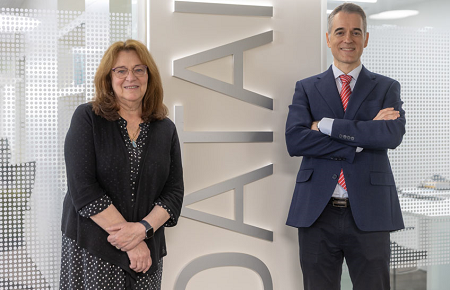
Image: Manuel Castells / From left to right: Leslie S. Prichep and Rubén Armañanzas.

La mejor actitud que podemos adoptar es la de trat...

The research team observed changes in head circumf...
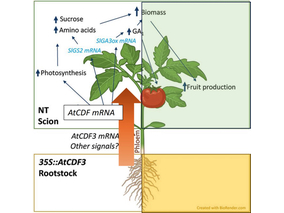
AtCDF3 gene induced greater production of sugars a...
En nuestro post hablamos sobre este interesante tipo de célula del...

Telum Therapeutics, a biotechnology company leveraging proprietary met...