It is estimated that around 5 million people worldwide suffer from inflammatory bowel disease (IBD), a term used to describe the set of chronic inflammatory disorders affecting the gastrointestinal tractThe most common are Crohn's disease and ulcerative colitis, two conditions that can have a significant impact on the daily lives of those who suffer from them and for which the only available treatment focuses on alleviating the symptoms and associated complications.
Despite the global increase in IBD cases in recent decades—especially in regions undergoing industrialization—and its evolution varying depending on the country, until now there was no clear epidemiological framework to trace its progression and anticipate its impact on healthcare systems.
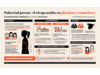
An international multicenter study published in Nature, with the participation of Parc Taulí, has confirmed for the first time the theory that IBD does not progress uniformly throughout the world, but rather follows a discernible temporal and spatial evolution through four distinct stages:
To validate this model, the consortium's research team GIVES-21 (Global IBD Visualization of Epidemiology Studies in the 21st Century) has reviewed epidemiological data accumulated over a century, coming from more than 500 studies in more than 80 regions of the world. The results have made it possible to evaluate the incidence and prevalence of IBD, and predict its evolution in the coming years.
“Knowing how IBD will impact healthcare systems in the future will allow health authorities to anticipate and plan resources and public health policies more efficiently,” he says. Eduard Brunet, the researcher of the I3PT inflammatory bowel disease, liver disease and Helicobacter pylori group who participated in the study.
For years, Parc Taulí has been collaborating with the Information and Knowledge Unit of the Catalan Health Service and the Digitalization for the Sustainability of the Health System group, conducting population epidemiological studies on inflammatory bowel disease in Catalonia. Currently, Catalonia is in the third stage of the epidemiological framework, that of prevalence compensation.According to Brunet, "although the incidence could stabilize, the prevalence is expected to continue to grow significantly in the coming years."
The researcher warns that this trend is dangerous, since puts pressure on healthcare services"There will be more and more people who will require monitoring, chronic treatment and specialized care. If the system is already struggling to absorb the current burden, the situation could become unsustainable if measures are not taken."
However, today we do not have the tools to prevent inflammatory bowel disease; therefore, as Brunet reveals, "many of the measures that can be applied will involve increasing the human and material resources dedicated to the care of this set of pathologies."
Study reference: Hracs, L., Windsor, JW, Gorospe, J. et al. Global evolution of inflammatory bowel disease across epidemiological stages. Nature (2025). https://doi.org/10.1038/s41586-025-08940-0

La mejor actitud que podemos adoptar es la de trat...

The research team observed changes in head circumf...
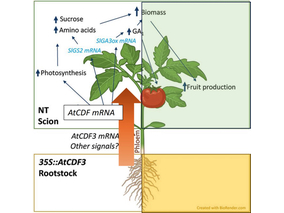
AtCDF3 gene induced greater production of sugars a...
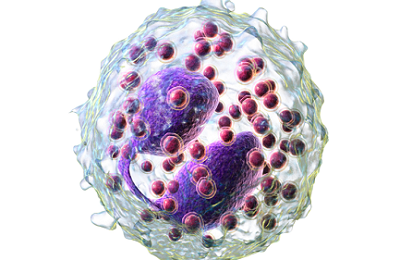
En nuestro post hablamos sobre este interesante tipo de célula del...

Telum Therapeutics, a biotechnology company leveraging proprietary met...