The security and defense sectors have moved to the center of the global stage. For years, they had been relegated to the margins of public agendas, overshadowed by other industries that dominated political priorities. But the world is changing. Ongoing geopolitical tensions and recent armed conflicts have brought security and defense back to the forefront as strategic priorities for States. In this new global context, it is no longer just about securing borders or modernising armed forces to protect national security, but about ensuring technological, energy, and health sovereignty.
Faced with this new reality, Spain has taken on the challenge decisively. For the first time in its recent history, investment in defense and security will reach 2% of GDP in 2025, thus meeting its NATO commitment. But beyond its political significance, this figure implies a real reconfiguration of the industrial model. The new Industrial and Technological Plan for Security and Defense, with more than €34 billion mobilised through 2037, prioritises not only the acquisition of weaponry or the enhancement of military capabilities, but the development of strategic dual-use technologies—those with both civilian and military applications. In this space, biotechnology becomes a critical ally, essential for national and international security, as reflected in NATO discussions and documents related to biotechnology.
The Alliance explicitly identifies biotechnology as one of the technologies set to transform international security in the coming decades, highlighting four main spheres of influence: military systems and logistics, information competition, the human/combatant dimension, and the environment. Furthermore, its Science & Technology Trends 2025–2045 report places biotechnology at the same level as artificial intelligence or quantum computing and emphasises both its potential and its risks: CRISPR-enabled bioterrorism (a technology that allows adding, removing or altering genetic material at specific sites in the genome), AI-assisted pathogen design, and the vulnerability of biodata.
In this context, health autonomy, the ability to respond to biological threats, and the capacity to produce solutions in situ have become as strategically important as energy or cybersecurity. And Spain starts from a strong position. According to AseBio, in 2023 more than 1,000 biotechnology companies were operating in the country, investing €1.282 billion in R&D, with annual growth of 4.1%. While 58% focus on human health, many others are active in environmental technologies, food, animal health, or industrial biotechnology. These capabilities—traditionally oriented toward the civilian sphere—have the potential to be applied in defense and security if properly guided and incentivised.
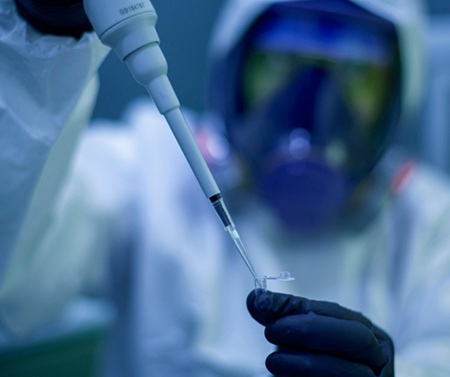
In this regard, the 2025 Defense Plan includes more than €10 billion allocated to new technologies, with specific budget lines for biosecurity, health, and dual-use projects. This represents a real opportunity for the biotechnology sector to secure funding, diversify markets, and accelerate innovation. Companies working, for example, on biosensors, rapid diagnostics, vaccines, biofabrication, or environmental biotechnology can become strategic suppliers to the security and defense ecosystem. This is not only due to current needs but also because they could validate technologies in operational environments, with more agile regulatory frameworks and more stable budgets than those found in the traditional health sector.
This exchange is also bidirectional: many solutions tested in military contexts later return to civilian markets, such as rapid diagnostic systems, mobile platforms for medicine production, advanced telemedicine models, or 3D bioprinting of tissues. The boundary between military and civilian applications is becoming blurred—and that is precisely the major opportunity for the biotech sector: to become a cross-cutting component of the new integrated security model.
However, a significant challenge remains: biotechnology does not currently appear on the Ministry of Defense’s strategic roadmap as a priority technology for this field. This gap contrasts with the vision of international organisations such as NATO, which does consider it a strategic technology, and with initiatives such as DIANA (Defense Innovation Accelerator for the North Atlantic), which actively promote the acceleration of biotechnological solutions with security applications. This creates collaboration opportunities for the Spanish biotechnology sector, as already recognised by organisations such as the CRG (Centre for Genomic Regulation).
Additionally, the European Union formally recognises biotechnology as a dual-use technology under Regulation 2021/821, reinforcing its potential for both civilian and military applications. This dual nature opens the door to funding opportunities for projects linked to security and defense, especially when aligned with national and European technological priorities.
To transform the connection between biotechnology capabilities and defense needs into reality, more than willingness is required. It is essential to build real bridges between the defense and security sector, the biotechnology industry, and public and private financing instruments. Calls such as RedIASalud—mobilising €50 million from European funds—point in the right direction and serve as an example.
In this scenario, the role of the State should not be limited to regulation: it must also support, identify viable projects, incentivise public-private collaboration, and reduce the financial risk for those investing in these solutions. Biotechnology cannot remain outside the ecosystem of “strategic dual-use technologies”; on the contrary, it must be at the center, as a structural asset for Spain’s and Europe’s health and technological sovereignty.
This new paradigm is not a temporary trend nor a passing consequence of global uncertainty. A country seeking to guarantee its security cannot depend on third parties to manufacture vaccines or produce critical treatments. It needs, at a minimum, a strong, coordinated biotechnology base with access to strategic financing. Spain already has the talent, leading companies, and R&D investment. What remains is to incorporate this strength into a more strategic vision that recognises biotechnology as a pillar of national sovereignty and security.
By Carmen Vela, member of Ayming’s Advisory Board
Carmen Vela was Secretary of State for Research, Development, and Innovation (2012–2018) and Chair of the Governing Board of the National Supercomputing Center – Barcelona Supercomputing Center and of the Alba Synchrotron.

La mejor actitud que podemos adoptar es la de trat...

The research team observed changes in head circumf...
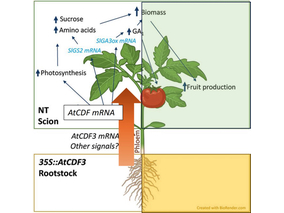
AtCDF3 gene induced greater production of sugars a...
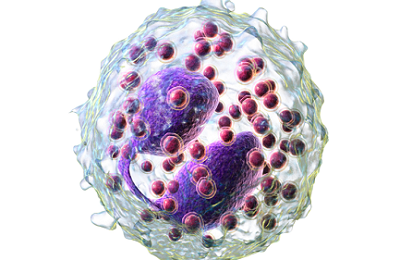
En nuestro post hablamos sobre este interesante tipo de célula del...

Telum Therapeutics, a biotechnology company leveraging proprietary met...