Research into different factors in the blood could contribute to better understanding and detecting the processes behind aging and the diseases associated with it. This was explained by Tony Wyss-Coray, Professor of Neurology and Neurological Sciences at Stanford University, USA, in his seminar Young Blood for Old Brains, held at the CNIO.
Wyss-Coray has proved in animal models that an infusion of blood plasma from young individuals can improve brain function and memory in older individuals. For Manuel Valiente, head of the Brain Metastasis Group at CNIO, he is “one of the most courageous research innovators of his generation”.
This Swiss-born researcher focused his career on blood driven by the difficulty of investigating what happens in the brain on a molecular scale. Blood is “the organ that connects all the tissues through the vascular system and should actually have the capacity to collect molecular information from each cell,” he explained.
To study whether changes that occur in blood proteins throughout life play a role in aging itself, or even in disease, Wyss-Coray transfused blood plasma from young to old mice, and vice versa. He found that young plasma promotes neural stem cell activity, and improves brain function and memory. However, young mice with plasma from much older mice experience accelerated aging.
Same organism, different aging rates
Another relevant result, after analyzing proteins in the blood of some 5,000 participants, was that we are aging throughout our lives and not only in the last part of our lives.
But there are differences between organs of the body, even between tissues or areas of the same organ. A blood test can be used to profile an ‘aging atlas’ of the body.
By analyzing blood it is also possible to investigate, said Wyss-Coray, the influence on aging or on disease risk of interventions such as calorie restriction, and the role of environmental conditions and lifestyle habits such as exercise.
As for the possibilities of these studies having an impact in the clinic, the researcher pointed out that “there is going to be an explosion of clinical trials in the next few years” exploring this line of research and including neurodegenerative diseases, such as Alzheimer’s disease. Wyss-Coray believes they are still on a small scale, but that they offer proof of concept for further delving into their possibilities. “We are seeing only the tip of the iceberg”, he concluded.
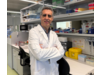
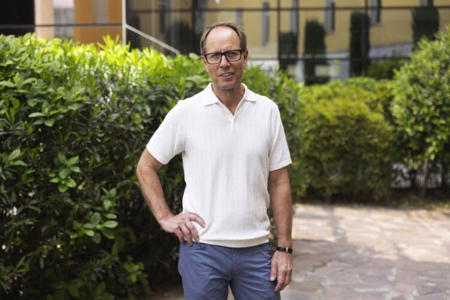
Image: Tony Wyss-Coray, de la Universidad de Stanford, en el CNIO. /Laura M. Lombardía. CNIO.

La mejor actitud que podemos adoptar es la de trat...

The research team observed changes in head circumf...

AtCDF3 gene induced greater production of sugars a...

En nuestro post hablamos sobre este interesante tipo de célula del...
Telum Therapeutics, a biotechnology company leveraging proprietary met...