A study conducted by the research group MP20 Biomarkers of Metabolic and Bone Diseases from the Granada Biosanitary Research Institute (ibs.GRANADA), led by UGR professor Manuel Muñoz Torres, has revealed significant findings on the role of the proteins sclerostin and periostin in predicting cardiovascular risk in patients with type 2 diabetes.
Cardiovascular diseases represent one of the main causes of mortality in people with type 2 diabetes. Some proteins present in bones, such as sclerostin and periostin, have previously been linked to vascular health. This study evaluates whether these proteins can also be predictors of cardiovascular risk in diabetic patients, according to the SCORE2-Diabetes algorithm.
This algorithm has been developed, validated and calibrated by the European Society of Cardiology to predict the 10-year risk of cardiovascular disease in people with type 2 diabetes. The group of scientists from UGR, ibs.GRANADA, Hospital Universitario Clínico San Cecilio de Granada and CIBER de Fragilidad y Envejecimiento Saludable (CIBERFES) belonging to the Carlos III Health Institute has collected clinical data, biochemical measurements and serum levels of sclerostin and periostin from patients with type 2 diabetes and has shown that these bone proteins are involved in cardiovascular risk, a finding that helps to predict cardiovascular events more accurately.
The study included 104 patients with type 2 diabetes (42 with low-moderate cardiovascular risk and 62 with high-very high risk, according to the SCORE2-Diabetes algorithm) and showed significantly elevated levels of sclerostin and periostin in patients with type 2 diabetes and high-very high cardiovascular risk, establishing a possible connection between these proteins and vascular risk. In addition, specific serum levels of sclerostin and periostin are proposed as predictors of cardiovascular risk in the diabetic population.
The researchers of this work therefore point out the clinical relevance of the findings, which open up new possibilities for the identification of innovative biomarkers of cardiovascular risk in patients with type 2 diabetes. The proteins sclerostin and periostin may play a key role in the prediction of cardiovascular events, which will facilitate more personalized and effective interventions in this high-risk population.
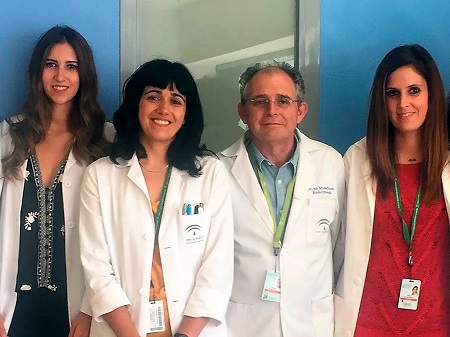
The work was led by the professor of Medicine at the UGR Manuel Muñoz Torres together with the professor of the Faculty of Medicine Antonia García Martín, who also belongs to the group of endocrinologists at the San Cecilio University Clinical Hospital. The UGR researcher Sheila González Salvatierra also participated. This study was funded by projects from the Junta de Andalucía, the Carlos III Health Institute and the European Regional Development Fund, as well as by the CIBER on Frailty and Healthy Ageing (CIBERFES).
Bibliographic reference: González-Salvatierra S, García-Martín A, García-Fontana B, Martínez-Heredia L, García-Fontana C, Muñoz-Torres M. Bone proteins are associated with cardiovascular risk according to the SCORE2-Diabetes algorithm. Cardiovasc Diabetol. 2024;23:311.

La mejor actitud que podemos adoptar es la de trat...

The research team observed changes in head circumf...
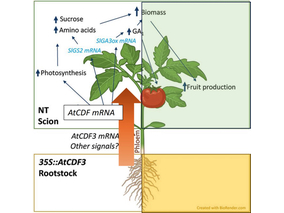
AtCDF3 gene induced greater production of sugars a...
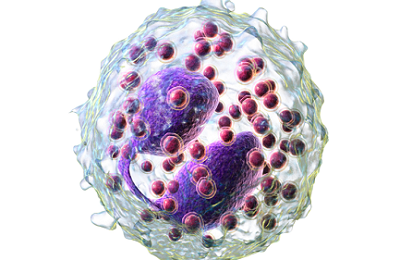
En nuestro post hablamos sobre este interesante tipo de célula del...

Telum Therapeutics, a biotechnology company leveraging proprietary met...