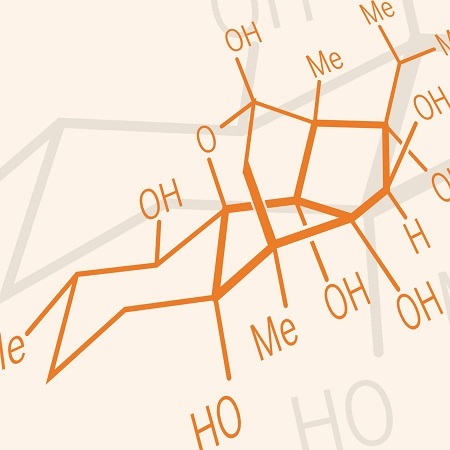
Xavier Verdaguer—associate researcher in the Asymmetric Synthesis Lab, headed by Antoni Riera—writes a Science Perspectives article on an study by Chuang et al. that describes a new method for the artificial synthesis of (+)-ryanodol, a plant-derived molecule that has potential pharmaceutical applications.
The article by IRB Barcelona researcher explains a specific step in the synthesis of this compound that involves the Pauson-Khand cycloaddition. This reaction allows the generation of 5-member rings from simple fragments in a single step. This type of reaction facilitates a rapid increase in molecule complexity. When natural complex molecules with pharmaceutical properties are isolated, it is often necessary to synthesise them in order to cover demands. In this regard, finding synthetic methods is crucial for drug development.
As an expert in this kind of reaction, Verdaguer was approached by Science to give his opinion in the Perspectives section, which is devoted to comments by specialists in various fields on the articles published in the journal.
Reference article:
Verdaguer, X.
Building molecular complexity from scratch
Science, 353 (6302), 866-867 (2016)
Imagen: Depicted above, (+)-ryanodol is a derivate of a natural compound with intracellular calcium-regulating capacity

La mejor actitud que podemos adoptar es la de trat...

The research team observed changes in head circumf...

AtCDF3 gene induced greater production of sugars a...

En nuestro post hablamos sobre este interesante tipo de célula del...

Telum Therapeutics, a biotechnology company leveraging proprietary met...