Business growth is defined as the sustained increase in a company’s revenues, profits, size and influence. This growth can be achieved through a variety of strategies, such as increasing productivity, geographic expansion, launching new products, entering new sectors or acquiring other companies. A company enters a significant growth phase when its growth rate is in double digits.
The life cycle of a company consists of several stages: creation, growth, maturity and decline. In the growth stage, the company expands and seeks new opportunities. In maturity, it consolidates its position in the market and optimises its operations. If not managed properly, it can go into decline, losing competitiveness and reducing its market share, which is why it is advisable to plan for a growth phase before the company enters a decline phase.
There are multiple opportunities to foster business growth. Diversification of products or services allows the company to attract a broader customer base and maximise its revenue potential. To do this, it is key to identify opportunities that are aligned with the company’s values and avoid compromising quality or brand. Another key strategy is market expansion and segmentation, which involves adapting the company’s offering to new customer segments and markets. In addition, strategic alliances and mergers allow the company to expand its reach, acquire new technologies or products and strengthen its negotiating position. However, these strategies require a detailed analysis of the associated risks and benefits.
Barriers and Challenges to Business Growth
There are several barriers that can hinder business growth.
Business Growth
There are two types of business growth:
Organic
Organic growth is based on continuous improvement of products, services and internal processes without resorting to acquisitions or mergers. This approach increases profitability and long-term sustainability, improves the quality of products and services, and increases customer satisfaction and loyalty.
To achieve successful organic growth, companies must focus on understanding and meeting their customers’ needs, using digital marketing strategies, expanding their product portfolio and offering customised solutions. It is essential to regularly measure performance through key performance indicators (KPIs), such as customer acquisition and retention rate, customer acquisition cost (CAC), customer lifetime value (CLV) and conversion rate.
Inorganic
Inorganic growth involves expansion through acquisitions, mergers or strategic alliances rather than gradual growth. This strategy allows for rapid growth, entry into new markets and risk diversification. However, it requires a thorough analysis of the opportunities and associated risks.
Mergers can be of different types:
Each type of merger has benefits and risks, such as the need to integrate business cultures, retain key employees and comply with antitrust regulations. To minimise these risks, it is essential to establish clear communication, define a structured integration strategy and ensure compliance with applicable legal regulations.
Business growth is therefore a continuous process that requires well-defined strategies and effective management of challenges. Both organic and inorganic growth offer unique opportunities, but also present barriers that must be overcome with planning, innovation and leadership. But the key to success generally lies in adaptability, market differentiation and efficient management of talent and financial resources.
Article by Josep Lluís Falcó – Co-founder and CEO of GENESIS Biomed
SOURCE: This article summarises information from the conference on business growth strategies, given by Josep Lluís Falcó, CEO of GENESIS Biomed, and organised by ACCIÓ in Catalonia.

La mejor actitud que podemos adoptar es la de trat...

The research team observed changes in head circumf...
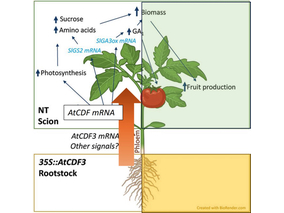
AtCDF3 gene induced greater production of sugars a...

En nuestro post hablamos sobre este interesante tipo de célula del...

Telum Therapeutics, a biotechnology company leveraging proprietary met...