The Centre for Genomic Regulation (CRG) has received two grants in the CaixaResearch call for Health Research 2024. Dr. Pia Cosma and Dr. Luis Serrano have received around one million euros each to develop innovative projects which tackle blindness and lung metastasis.
The ”la Caixa” Foundation has selected a total of 29 biomedical research projects of excellence in this call, giving out a total of 25.7 million euros to research centres, hospitals and universities in Spain and Portugal.
Of the 580 proposals submitted, the CRG projects stand out for their element of international collaboration with scientific teams in Portugal. The grants will allow the teams to advance their research and bring their findings closer to clinical practice.
A synthetic retina to restore vision for blindness linked to retinitis pigmentosa
Degenerative retinal diseases are a heterogeneous group of pathologies that affect vision, some of which can cause blindness. Billions of people around the world suffer from one of these pathologies. Among them, the most common is retinitis pigmentosa, a rare degenerative pathology that affects one in every 3,000-5,000 people.
Patients progressively lose photoreceptors in their retina, the cells of the eye which convert light into electrical signals that are transmitted to the brain. When the loss of photoreceptors reaches advanced stages, the disease has no cure.
However, even in cases that already present blindness, a part of the retina remains functional. The project led by Dr. Cosma will take advantage of this fact to develop a synthetic retina that will connect with the portion of the patient's retina which remains functional and help them recover their vision.
"Our goal is to develop an innovative solution that will allow patients to see again in the future," explains Dr. Pia Cosma. "If we can make the synthetic retina work in animal models, we will be one step closer to offering an effective therapy for those suffering from retinitis pigmentosa and other forms of blindness."
Together with Professor Rui L. Reis from the I3Bs Research Institute at the University of Minho (Portugal), the team will test this regenerative therapy in mouse models of the disease to verify whether vision can be effectively restored. The results obtained in the project will be the basis for future clinical trials in humans. The ultimate goal of the project is to identify a new treatment for various types of blindness.
A bacterial therapy designed to combat lung metastasis
Between 20% and 54% of malignant tumours produce metastases in the lung. Despite the advances made in recent years with immunotherapies, a significant percentage of patients do not respond to these treatments, largely because metastatic tumour cells develop resistance.
In an attempt to overcome this resistance, new preclinical approaches are being explored that take advantage of the immunogenic effects of the LCOR protein in combination with immunotherapy. However, the systemic administration of this combination of treatments carries a significant risk that the patient may experience serious autoimmune side effects. Hence the need for therapies that can be applied locally, directly to the tumour.
"We are developing a strategy that uses modified bacteria to directly attack the lung tumour," says Dr. Luis Serrano, director of the CRG. "Through this targeted approach we hope to improve the efficacy of the treatment and reduce the side effects on the rest of the body."
Dr. Serrano and Dr. Toni Celià Terrassa from the Hospital del Mar Research Institute will use genetically modified bacteria to colonize the tumour and administer LCOR protein and immunotherapy to the tumour cells simultaneously. The aim is to improve the anti-tumour response and reduce side effects on the rest of the body.
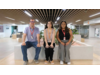
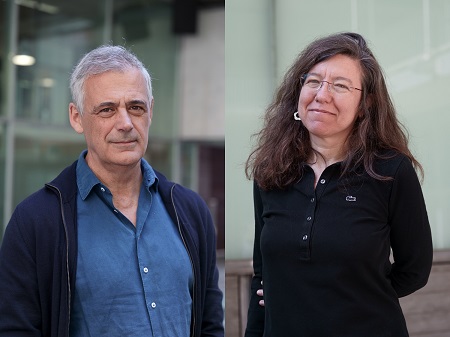
Image: Dr. Cosma (right) and Dr. Serrano (left) have received one million euros each to develop innovative projects at the CRG.

La mejor actitud que podemos adoptar es la de trat...

The research team observed changes in head circumf...
AtCDF3 gene induced greater production of sugars a...
En nuestro post hablamos sobre este interesante tipo de célula del...

Telum Therapeutics, a biotechnology company leveraging proprietary met...