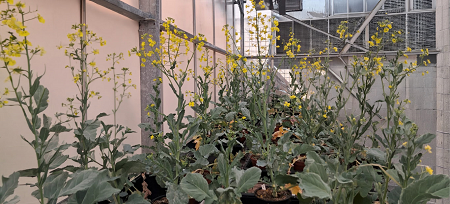
Global warming represents a major challenge for present and future agriculture. Understanding how plants and crops adjust their development in response to fluctuating environmental conditions is key to ensuring stable and sustainable agricultural production in the coming years.The timing of flowering is essential for optimal fruit and seed production in crops, as well as for the reproductive success of plant species. Plants rely on seasonal fluctuations in environmental cues such as photoperiod and temperature to trigger flowering at the right moment.The precise regulation of flowering time depends on the control of master genes, finely modulated by chromatin dynamics. In the current context of climate change, a deeper understanding of these molecular mechanisms will help to design strategies that facilitate crop adaptation to temperature fluctuations.
At present, there is still limited knowledge of how chromatin mediates plant developmental responses under changing environmental conditions. In this context, the characterization of a new chromatin reader, MBD4, which recognizes histone arginine methylation in Arabidopsis thaliana and Brassica napus, represents a significant advance in our understanding of epigenetic regulation in plants. In addition, unraveling the mechanisms of developmental plasticity driven by epigenetic marks in crops such as oilseed rape remains a challenge.
This work broadens the scope of epigenetic research in plants, showing how traits relevant to agricultural performance can be addressed mechanistically in a model plant, and opening promising avenues for future research.
Original Paper: Abelenda, J.A.,✉ Carrera-Castaño, G., Calleja, J., del Olmo, I., Pozas, J., Alonso-Pérez, E., Piñeiro, M.,✉ Jarillo, J.A.✉ 2026. The MBD4 chromatin reader regulates transcription related to temperature and flowering responses through recognition of histone arginine methylation in Arabidopsis thaliana and Brassica napus. Plant Communications 101869. DOI: 10.1016/j.xplc.2026.101869

La mejor actitud que podemos adoptar es la de trat...

The research team observed changes in head circumf...
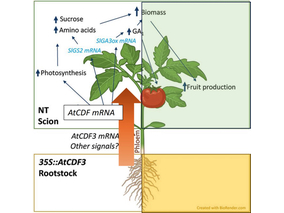
AtCDF3 gene induced greater production of sugars a...
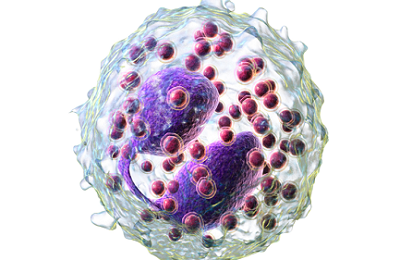
En nuestro post hablamos sobre este interesante tipo de célula del...

Telum Therapeutics, a biotechnology company leveraging proprietary met...