The work, co-led by Dr. Malu Martínez-Chantar (CIBERehd) and Dr. Rubén Nogueiras (CIBERobn), and published in Molecular Metabolism, shows that modulating this protein improves glucose control and reduces fat accumulation in experimental models of type 2 diabetes and obesity.
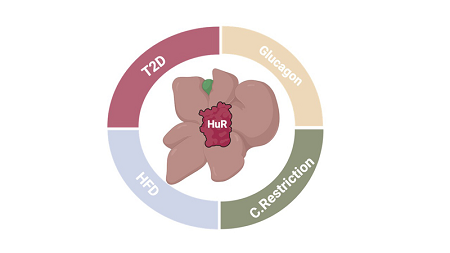
The liver continuously decides whether to produce glucose or store it, depending on the body’s needs. However, in situations such as prolonged fasting, high-fat diets, or obesity, this system can become unbalanced and generate more sugar than necessary. The study shows that under these conditions, the activity of the protein (HuR) increases, acting on cellular messages (messenger RNA) involved in glucose production.
The team also described how this mechanism works: the protein (HuR) acts as a “switch” that activates other molecules (such as C/EBPβ and the enzyme PCK1), which drive glucose production in the liver. When this system is overactivated, it contributes to elevated blood sugar levels.
To confirm its role, the researchers reduced the levels of this protein in the liver in experimental models. The results were clear: glucose production decreased, insulin sensitivity improved, energy storage in the form of glycogen increased, and both body weight and fat accumulation were reduced. There were also indications that these changes could influence appetite control through communication between the liver and the brain.
Overall, these findings position this protein (HuR) as a promising therapeutic target for type 2 diabetes and obesity. The study opens new avenues for developing more precise treatments focused on the molecular mechanisms that regulate metabolism and highlights the importance of messenger RNA control in liver health.
Reference: Lachiondo-Ortega, S., González-Recio, I., Bravo, M., Gonzalez-Rellan, M. J., Sanz-Parra, A., Porteiro, B., et al. Hepatic HuR modulates glucose metabolism through the C/EBPβ/PCK1 pathway. Molecular Metabolism. DOI: 10.1016/j.molmet.2026.102354.
About CIC bioGUNE
The Centre for Cooperative Research in Biosciences (CIC bioGUNE), member of the Basque Research & Technology Alliance (BRTA), located in the Bizkaia Technology Park, is a biomedical research organisation conducting cutting-edge research at the interface between structural, molecular and cell biology, with a particular focus on generating knowledge on the molecular bases of disease, for use in the development of new diagnostic methods and advanced therapies.
About BRTA
BRTA is an alliance of 4 collaborative research centres (CIC bioGUNE, CIC nanoGUNE, CIC biomaGUNE y CIC energiGUNE) and 13 technology centres (Azterlan, Azti, Ceit, Cidetec, Gaiker, Ideko, Ikerlan, Leartiker, Lortek, Neiker, Tecnalia, Tekniker y Vicomtech) with the main objective of developing advanced technological solutions for the Basque corporate fabric.
With the support of the Basque Government, the SPRI Group and the Provincial Councils of the three territories, the alliance seeks to promote collaboration between the research centres, strengthen the conditions to generate and transfer knowledge to companies, contributing to their competitiveness and outspreading the Basque scientific-technological capacity abroad.
BRTA has a workforce of 3,500 professionals, executes 22 % of the Basque Country's R&D investment, registers an annual turnover of more than 300 million euros and generates 100 European and international patents per year.

La mejor actitud que podemos adoptar es la de trat...

The research team observed changes in head circumf...
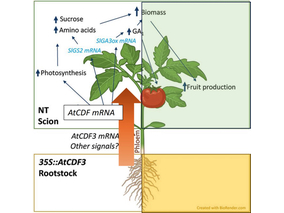
AtCDF3 gene induced greater production of sugars a...
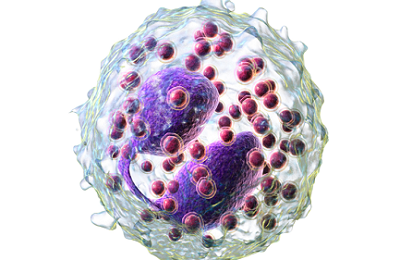
En nuestro post hablamos sobre este interesante tipo de célula del...

Telum Therapeutics, a biotechnology company leveraging proprietary met...