A team of researchers from IDIBAPS, within the context of the Clínic Barcelona Comprehensive Cancer Centre (4CB), has contributed to a special issue of the journal Cell published to mark the 25th anniversary of the “Hallmarks of Cancer”, a conceptual model that describes the fundamental biological characteristics of cancer.
In this commemorative volume, Cell includes review articles on different types of cancer, one of which is Hallmarks of liver cancer: therapeutic implications. The article is coordinated by Josep M. Llovet, Head of the Translational Research in Hepatic Oncology group at IDIBAPS, Professor of Medicine at the University of Barcelona, ICREA Research Professor, and Professor of Medicine at the Icahn School of Medicine at Mount Sinai. The review also includes contributions from Roser Pinyol, from the same group, and Silvia Affo, Head of the Tumour Microenvironment Heterogeneity and Plasticity (TMHet) group at IDIBAPS.
The article analyses the most relevant biological characteristics of liver cancer and explains how they have guided translational research and the development of new therapeutic strategies.
Liver cancer: a common and complex disease with high mortality
Liver cancer represents a major public health challenge worldwide and is one of the most common tumours with an unfavourable prognosis. Hepatocellular carcinoma (HCC) accounts for approximately 85% of cases, while intrahepatic cholangiocarcinoma (iCCA) represents around 10%. These tumours are often diagnosed at advanced stages, when therapeutic options are limited.
Over the past two decades, the treatment of liver cancer has undergone a major transformation, largely due to the introduction of targeted therapies, immunotherapy, and precision medicine.
What biological features drive liver cancer?
The review explains that the development of liver cancer does not rely on a single mechanism, but rather on a combination of biological processes that tumour cells activate in order to grow, survive and spread. These include alterations in cell proliferation, nutrient acquisition, interactions with the immune system, and the ability to adapt to inflammatory or fibrotic environments.
In hepatocellular carcinoma (HCC)
Key processes include:
In intrahepatic cholangiocarcinoma (iCCA)
In addition to the above mechanisms, the review highlights:
These insights have been crucial in shaping new lines of translational research aimed at bridging laboratory discoveries with clinical practice.
How have these insights transformed liver cancer treatment?
The review describes how scientific progress based on these biological mechanisms has led to major advances in patient care.
New treatments for hepatocellular carcinoma
Therapeutic options have evolved from a very limited scenario to the availability of:
Precision medicine in cholangiocarcinoma
The identification of actionable mutations has marked a turning point. Today, patients with iCCA may benefit from:
In addition, the combination of chemotherapy and immunotherapy has become the standard treatment for advanced disease.
“This Cell special issue provides an opportunity to take stock of what we have learned about liver cancer. Understanding the mechanisms that tumour cells use to grow has enabled the development of more precise therapies. This review summarises 25 years of research and highlights the avenues that may further improve treatment in the future,” concludes Dr Josep M. Llovet.
Funding: This study was funded by the European Union through the THRIVE project (Grant Agreement No. 101136622).
Study reference: Llovet J, Pinyol R, Affo S, et al. Hallmarks of liver cancer: Therapeutic implications. Cell, 189, 2490-2514
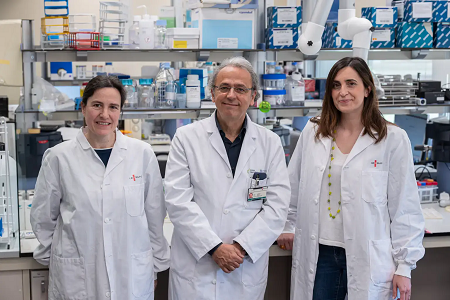
Image: From left to right, Roser Pinyol, Josep M. Llovet and Sílvia Affò

La mejor actitud que podemos adoptar es la de trat...

The research team observed changes in head circumf...
AtCDF3 gene induced greater production of sugars a...
En nuestro post hablamos sobre este interesante tipo de célula del...

Telum Therapeutics, a biotechnology company leveraging proprietary met...