Immunotherapy has significantly improved the treatment of aggressive tumors such as melanoma, but in a large number of patients it still does not work. One of the major current challenges is to extend the effectiveness of this therapeutic strategy, which is based on enhancing the body’s natural immune response, to more tumor types.
The Melanoma Group at the Spanish National Cancer Research Centre (CNIO), led by Marisol Soengas, has identified one of the reasons why immunotherapy fails. A protein called Midkine prevents the immune system from acting against melanoma—the most aggressive form of skin cancer—and other types of cancer.
Because of Midkine, the anti-cancer control mechanisms of the immune system are unable to detect and destroy tumor cells, which spread throughout the body and generate metastases.
The discovery of Midkine’s role resulted from research by the CNIO group largely funded by the European Research Council (ERC Advanced Grant), the institution that selects Europe’s most promising scientific projects.
The ERC will now fund the first step to turn this knowledge into drugs that could enhance immunotherapy, by selecting a new project from Soengas’ group in the competitive ERC Proof of Concept call to develop drugs and inhibitors that block Midkine’s action.
AI to inhibit Midkine
This is not the first attempt to inhibit Midkine. Since its discovery, many groups, including Soengas’ team, have tried to develop drugs and inhibitors to block it, without success: “Midkine is a protein with a very dynamic structure, which has made it difficult to develop drugs capable of blocking it,” explains Soengas.
Proteins interact with each other through precise recognition of their shape—its three-dimensional structure. In the ERC-funded project, the groups will search for molecules whose shape is complementary to Midkine, so that when they bind to it, they inactivate it. They are using an innovative strategy: designing with the help of artificial intelligence thousands of mini-proteins, and selecting and experimentally validating those most likely to bind to Midkine.
The Melanoma Group is collaborating on this project with the Genome Integrity and Structural Biology Group at CNIO, led by Rafael Fernández-Leiro, an expert in computational protein design and structural and biochemical characterization.
The team has already identified multiple mini-proteins (“minibinders”) capable of binding Midkine with high affinity and blocking its activity in experimental assays. They will focus on the five most promising candidates and validate their effect in both tumor cells and mice, to demonstrate whether they could become the basis of future drugs against melanoma and other tumors.
Accelerating the development of new strategies
“Recent advances in computational protein design allow us to create entirely new molecules tailored to a specific therapeutic target. This project shows how these tools can accelerate the development of new strategies against cancer,” says Leiro.
“We hope these studies will support the development of innovative, first-in-class Midkine inhibitors, to treat melanoma and other tumors resistant to the immune system,” adds Soengas.
Highly competitive call
The ERC Proof of Concept call aims to transform scientific results into new technologies—in this case, drugs. Only one in three proposals is funded. The CNIO project is one of 182 funded projects across 21 European countries, sharing a total of €27.3 million (€150,000 each). In Spain, 13 projects were selected.
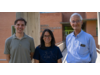
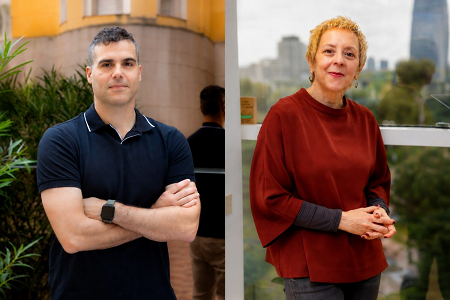
Imagen: CNIO researchers Rafael Fernández Leiro and Marisol Soengas. /Laura M. Lombardía. CNIO

La mejor actitud que podemos adoptar es la de trat...

The research team observed changes in head circumf...
AtCDF3 gene induced greater production of sugars a...
En nuestro post hablamos sobre este interesante tipo de célula del...

Postnatal survival of more than 13 months has also been achieved, with...