As the body ages, the activity of brown adipose tissue decreases, fewer calories are burned, and this can promote obesity and certain chronic cardiovascular pathologies that worsen with age. A study led by the University of Barcelona has identified a molecular mechanism that is key to the loss of brown fat activity during aging. The work opens new perspectives for designing strategies to enhance the activity of this organ and prevent chronic metabolic and cardiovascular diseases during aging.
The research, published in the journal Science Advances, is led by Professor Joan Villarroya from the Faculty of Biology and the Institute of Biomedicine of the University of Barcelona (IBUB) —located at the Barcelona Science Park— and the CIBER Area of Obesity and Nutrition Physiology (CIBEROBN). Teams from the Albert Einstein College of Medicine in New York (United States) also collaborated in the study.
Brown adipose tissue: how to prevent its inactivation during aging?
The new study, carried out with animal models, reveals that the thermogenic activation of brown fat is associated with an increase in a cellular process known as chaperone-mediated autophagy (CMA), which enhances the selective degradation of specific proteins.
During aging, chaperone-mediated autophagy decreases, causing a loss of brown adipose tissue activity. “Therefore, acting on chaperone-mediated autophagy may be a key way to modulate the activity of this tissue,” explains Professor Joan Villarroya from the Department of Biochemistry and Molecular Biomedicine at the Faculty of Biology.
The activity of brown adipose tissue is tightly regulated to prevent uncontrolled metabolization of different chemical substrates. This control is ensured by proteins that act as repressors of thermogenic activity and are activated whenever the body does not need to stimulate brown adipose tissue.
“The function of chaperone-mediated autophagy is the selective elimination of proteins. What we have observed is that this process is responsible for degrading these repressor proteins, thereby enabling brown fat activity,” notes Professor Villarroya.
For many years, researchers have tried to design drugs capable of activating brown adipose tissue to prevent its decline, but until now, the various approaches have produced unwanted side effects. “Fortunately, experimental drugs that effectively modulate chaperone-mediated autophagy are now beginning to emerge,” adds Villarroya.
“In the study, aged mice were treated with these drugs, and it was possible to maintain adipose tissue activity and improve metabolism despite aging.”
Future drugs for patient treatment
Currently, some preclinical-use drugs designed to activate this process are available. These were originally developed for the potential treatment of neurodegenerative diseases, in which proteins with pathological action often accumulate.
In the clinical setting, the use of these compounds could be considered to prevent brown fat inactivation with aging or under other conditions in which low brown adipose tissue activity has pathological consequences, such as obesity or diabetes.
For this reason, the research team is studying how to target chaperone-mediated autophagy to boost metabolic energy expenditure and thus control obesity and its negative cardiometabolic effects. “We are developing these lines of research both in experimental models and in early studies with patients, in collaboration with several hospitals,” concludes Joan Villarroya.
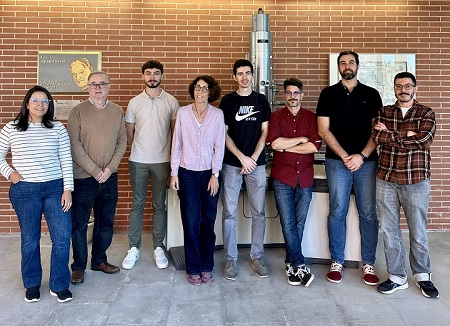
Image: From left to right: Tania Quesada-López, Francesc Villarroya, Albert Blasco-Roset, Marta Giralt, Alberto Mestres-Arenas, Joan Villarroya, Aleix Gavaldà-Navarro, and Rubén Cereijo.
Reference article: Mestres-Arenas, Alberto et al. “Chaperone-mediated autophagy controls brown adipose tissue thermogenic activity.” Science Advances, October 2025. DOI: 10.1126/sciadv.ady0415.

La mejor actitud que podemos adoptar es la de trat...

The research team observed changes in head circumf...
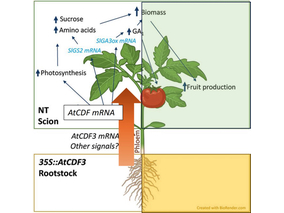
AtCDF3 gene induced greater production of sugars a...
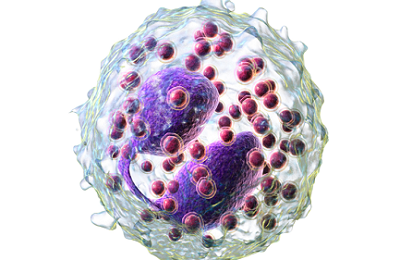
En nuestro post hablamos sobre este interesante tipo de célula del...

Telum Therapeutics, a biotechnology company leveraging proprietary met...