A study led by María Daca-Álvarez and coordinated by Francesc Balaguer, both from the Gastrointestinal and Pancreatic Oncology group at IDIBAPS, has revealed significant geographical differences in the clinical, pathological and familial characteristics of early-onset colorectal cancer - that is, diagnosed before the age of 50 - in Europe. Their analysis shows that this type of cancer does not present in the same way in all regions, which could have implications for clinical and preventive approaches.
The research, recently published in the journal BJS Open, included a total of 851 patients from six European countries: Spain, Italy, United Kingdom, Luxembourg, Netherlands, and Poland. The results show that, in Mediterranean countries such as Spain and Italy, early-onset colorectal cancer is more associated with environmental factors such as overweight and obesity. On the other hand, in non-Mediterranean countries such as the United Kingdom and the Netherlands, family history has a more significant weight in the onset of the disease, in addition to presenting at an earlier age.
Colorectal cancer is the third most diagnosed among men and the second among women worldwide. Although its overall incidence is decreasing thanks to screening programmes in people over 50 years of age, early onset is increasing. In Europe, however, this increase is not uniform, different patterns are detected depending on the country and region. In fact, the regional incidence of early-onset colorectal cancer can vary up to tenfold. This research is framed within the international consortium GEOCODE (Global Early-Onset Colorectal Cancer Database), which aims to study and analyse the clinical and translational aspects of early-onset colorectal cancer worldwide.
“This collaborative analysis highlights the urgent need to adapt preventive and diagnostic strategies to the context of each region, taking into account genetic, lifestyle and environmental factors," explains Francesc Balaguer, head of the Gastroenterology service at the Hospital Clínic, and one of the coordinators of the work together with José Perea from the University of Salamanca.
For her part, María Daca-Álvarez, one of the first-named authors of the article, emphasizes: “The confirmation of geographical differences helps us to characterise the disease, but it also helps us to understand its molecular basis and to define a more personalised management for it.”
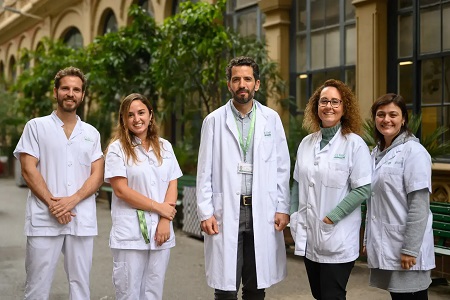
Imagen: From left to right: Joan Llach, Maria Daca, Francesc Balaguer, Teresa Ocaña and Leticia Moreira.

La mejor actitud que podemos adoptar es la de trat...

The research team observed changes in head circumf...

AtCDF3 gene induced greater production of sugars a...

En nuestro post hablamos sobre este interesante tipo de célula del...

Telum Therapeutics, a biotechnology company leveraging proprietary met...