The study was led by Professors Gustavo Deco and Morten L Kringelbach in their international collaboration between Center for Brain and Cognition, University Pompeu Fabra, Barcelona (Spain), Centre for Eudaimonia and Human Flourishing, Department of Psychiatry, University of Oxford (UK) and Center for Music in the Brain, University of Aarhus (Denmark).
The new research builds on their findings from a previous major study involving 1,000 people, which found that the brain is similar to an orchestra in that it is hierarchically organised and that information is integrated in a small group of ‘conducting’ brain regions before being broadcast to the whole brain.
This led Deco and Kringelbach to propose the novel hypothesis that major depression and other neuropsychiatric disorders could be caused by the breakdown in these ‘conductors’ orchestrating brain dynamics from the top of the hierarchy. They tested their hypothesis by using brain imaging data from patients at baseline and after treatment for depression in a 2-arm double-blind phase II randomized controlled trial comparing psilocybin therapy with escitalopram.
Analysing this data with a novel whole-brain modelling framework, the authors found that the two pharmacological interventions caused significantly different hierarchical reconfigurations of whole-brain dynamics despite leading to equal improvements in depressive symptoms. The treatment with psilocybin is leading to a hierarchical reconfiguration and general flattening of the hierarchy, while the treatment with escitalopram led to an increase in the hierarchical reorganisation. This top-down organisation may also be linked to dampened responsivity in stress circuitry under these drugs.
Gustavo Deco (UPF): "Neuropsychiatric disorders could be caused by the breakdown in regions orchestrating brain dynamics from the top of the hierarchy"
Lead author Professor Deco says: “Overall, the results demonstrate that psilocybin and escitalopram work in fundamentally different ways to rebalance brain dynamics in depression. This confirm the hypothesis that neuropsychiatric disorders could be caused by the breakdown in regions orchestrating brain dynamics from the top of the hierarchy.”
Morten L. Kringelbach (Oxford): "The study findings shed light on a major unsolved challenging problem of how the depressed brain gets rebalanced"
Senior author Professor Kringelbach, at the University of Oxford, adds: "Major depression has become pervasive and in on course to become the largest contributor to the burden of disease worldwide by 2030. New and better treatments are urgently needed but to make much needed progress, we need to better understand how current, effective interventions change brain dynamics in meaningful ways".
According to Kringelbach, the study findings shed light on a major unsolved challenging problem of how the depressed brain gets rebalanced. More generally, the new framework provides an exemplar of how measure the underlying mechanisms of any kind of intervention, "which might potentially revolutionise our understanding and treatment of neuropsychiatric disorders”.
Unlike previous research, this novel framework was able to capture the causal brain mechanisms from the neuroimaging data by estimating the ‘generative effective connectivity’ from whole-brain modelling of resting state for each session and patient. Hierarchy was determined for each of these sessions using measures of directedness and trophic levels on the effective connectivity, which captures cycle structure, stability and percolation. Further, the authors used artificial intelligence on the hierarchy measures to show significant pattern separation of the brain hierarchy associated with before/after depending on both drug type and responder/non-responder status, and were also able to predict treatment response.
Reference article: Deco, G., Sanz Perl, Y., Johnson, S. et al. Different hierarchical reconfigurations in the brain by psilocybin and escitalopram for depression. Nat. Mental Health (2024). https://doi.org/10.1038/s44220-024-00298-y

La mejor actitud que podemos adoptar es la de trat...

The research team observed changes in head circumf...
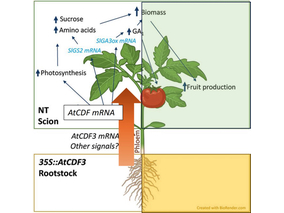
AtCDF3 gene induced greater production of sugars a...
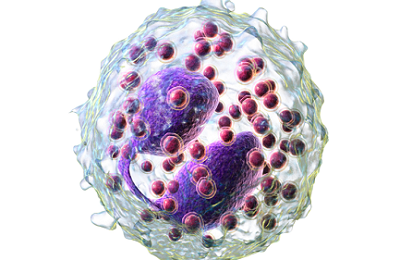
En nuestro post hablamos sobre este interesante tipo de célula del...

Telum Therapeutics, a biotechnology company leveraging proprietary met...