Biodiversity loss is one of the most alarming threats facing the entire planet. Degraded habitats, overexploited resources, the climate crisis and invasive species are just some of the factors that put the richness and variety of life at risk. The rapid and progressive disappearance of living organisms – with some experts acknowledging a sixth mass extinction event – can lead to great imbalances in ecosystems and alter the cycles and ecological relationships between species and other forms of life, including humans.
Sequencing the genomes of all plants, animals, and fungi on Earth—nearly two million known species—can protect biodiversity as we know it. This is the aim of the Earth Biogenome Project (Earth BioGenome Project, EBP), which aims to characterise the genomic biodiversity of species in different regions of the planet.
Within this global initiative, the Catalan Initiative for the Earth Biogenome Project (CBP), will sequence the genomes of eukaryotic species – living begins with cells that have a defined nucleus – found in the Catalan-speaking and cultural territories of Andorra, Northern Catalonia, the Balearic Islands, the Valencian Country and Catalonia.
The CBP project is described for the first today in the journal Nucleic Acids Research Genomics and Bioinformatics (NARGAB). The main authors of the work are professors Montserrat Corominas, from the Faculty of Biology, the Institute of Biomedicine of the University of Barcelona (IBUB) and the Institute of Catalan Studies (IEC), and Roderic Guigó, from the Centre for Genomic Regulation (CRG), Pompeu Fabra University (UPF) and the IEC. The study includes a Catalan translation of the work which can be consulted through the ZENODO database.
Sequencing genomes to protect species
Knowing the genome of living beings is decisive to design strategic tools that help minimize – and even reverse – the loss of biodiversity and the extinction of species. A quarter of all known species on the European continent are found in the territories of the Catalan Countries, where there is high biodiversity and endemic species abound, many of which are seriously threatened by global climate change, which is likely to have a major ecological impact on the Mediterranean basin, especially on freshwater ecosystems and mountain areas.
"One of the great successes of the Catalan Initiative for the Earth BioGenome Project (CBP) is that it has been able to bring together scientists from very diverse disciplines within biology, fields which have traditionally worked in isolation from each other. This favours interdisciplinary research, which is essential for the progress of science," says Montserrat Corominas, Professor in the Department of Genetics, Microbiology and Statistics at the UB and head of the REGnetREG Research Group at the UB.
Obtaining the genome of all species on Earth "may be the most important project in the history of science, and one of the most important in the history of humanity. Knowledge of these genomes will provide an unprecedented understanding of biological processes. This knowledge will have an impact that we cannot yet imagine in areas such as medicine, agriculture, biotechnology, etc., and also in many industrial processes, which are increasingly dependent on biological processes. This scientific milestone is essential for the development of the bioeconomy, i.e. an economy that develops with nature and not against nature," stresses Roderic Guigó, Group Leader of the Computational Biology and Health Genomics research programme at the Centre for Genomic Regulation (CRG).
The Balearic shearwater: a reference genome in conservation
Biologists, botanists, zoologists, geneticists, bioinformaticians, microbiologists, ecologists and other experts have combined their expertise to focus on research efforts that currently has the sequencing of the genome of 76 species in its sights.
In the pilot phase of the CBP, which began in the summer of 2020, a digital catalogue of eukaryotic species living in Catalonia was created, with little-explored taxa species, such as the freshwater flagellate (Singekia montserratensis); rare, endemic or difficult-to-locate species, such as the Catalan blind scorpion (Belisarius xambeui) or those considered emerging as biological models, such as the wall lizard (Podarcis muralis). It also wants to provide the genomes of endangered species, such as the Montseny newt (Calotriton arnoldi), the most endangered amphibian in Europe, or the red coral (Corallium rubrum); species used in medicine, such as the Pyrenean chamomile (Achillea ptarmica subsp. pyrenaica); and of economic interest, such as the pearly skyscraper (Xyrichtys novacula).
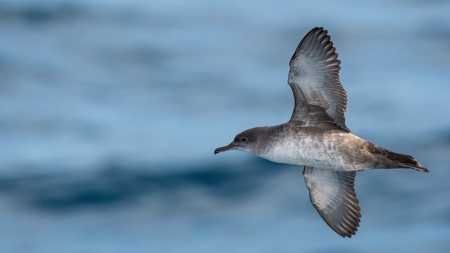
One of the first genomes sequenced is that of the Balearic shearwater (Puffinus mauretanicus), a seabird endemic to the Balearic Islands and critically endangered, especially through fishing bycatch, according to the International Union for Conservation of Nature (IUCN). The work to decipher this reference genome in conservation is coordinated by professors Marta Riutort and Julio Rozas, from the Faculty of Biology and the UB Biodiversity Research Institute (IRBio).
"Having the complete genome has allowed us to evaluate the real situation of Balearic shearwater populations much better," says Marta Riutort. "In addition, it has opened the way for us to develop a tool that should help in its conservation and that has already aroused the interest of the groups that are involved," adds Julio Rozas.
Addressing the Biodiversity Genomics Challenge
Nearly one hundred and fifty experts from institutions such as the UB, CRG, IBE-UPF-CSIC, ICREA, CNAG, ICTA-UAB, BSC-CNS, CRAG, ICBIBE, CSIC-UIB and IBB, among others, have participated in this project. Most of the genomes are sequenced at the Centro Nacional de Análisis Genómico (CNAG), based in the Barcelona Science Park (PCB), and the results can be consulted on the CBP website.
"Thanks to advances in DNA sequencing technologies and analysis procedures, we can obtain high-quality reference genomes of animal and plant species at a rate that was unthinkable just a few years ago," says Tyler Alioto, head of CNAG's genome assembly and annotation group. "Resembling sequencing data to form a genome is equivalent to deciphering a puzzle with millions of pieces. It has been necessary to develop very powerful computer tools."
The article follows the precedent of other scientific publications on regional projects within the EBP, such as the Darwin Tree of life (PNAS, 2022), the Portuguese Coalition for Biodiversity Genomics (EcoEvoArXiv, 2023), the Africa BioGenome Project (Nature, 2022) or the California Conservation Genomics Project (Heritage Magazine, 2022).
Sharing resources to protect biodiversity around the world
The study highlights the rich biodiversity of the territories that have historically shared a strong cultural tradition, mainly reflected in the use of the Catalan language. Thus, the CBP was promoted in 2019 by the Catalan Society of Biology (SCB), thanks to the legacy of Leandro Cervera (1891-1964) - president of the entity who remained in hiding during the Franco regime - and with the initial backing of the Catalan Institution of Natural History (ICHN) and the Institut d'Estudis Catalans (IEC). The project has now also received funding from the Department of Research and Universities of the Generalitat de Catalunya through the IEC.
For the authors, this work is also a way of bringing their research closer to citizens who finance research activity. This is especially relevant in the framework of an initiative open to the whole of society that appeals to a shared cultural and linguistic legacy. Since June 2024, the coordination group that manages the project's activities - it is renewed every four years - has been led by Marta Riutort (UB-IRBio) and Javier del Campo (Institute of Evolutionary Biology-IBE).
Beyond the borders of Catalan-speaking territories, the CBP wants to be part of a global transformative movement to increase social awareness of the threat that biodiversity loss poses to human well-being, and to promote a different and more balanced relationship with nature around the world. "Our hope is that when the international project is completed, it can be said that our countries have contributed significantly to it," conclude Montserrat Corominas and Roderic Guigó.
Image: The Baleraic Shearwater, the first species to have its genome sequenced as part of the CBP. Source: WikiMedia Commons

La mejor actitud que podemos adoptar es la de trat...
The research team observed changes in head circumf...
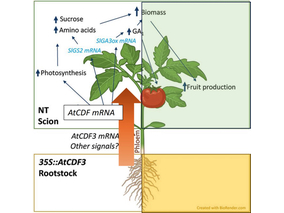
AtCDF3 gene induced greater production of sugars a...
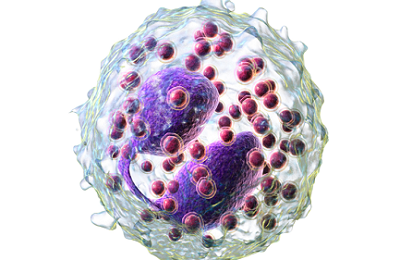
En nuestro post hablamos sobre este interesante tipo de célula del...

Telum Therapeutics, a biotechnology company leveraging proprietary met...