In recent years, the Spanish Agency of Medicines and Medical Devices (AEMPS) and the European Medicines Agency (EMA) have implemented various measures to attract clinical research and promote the conduct of clinical trials in Europe. For instance, Spain has introduced an accelerated evaluation process for phase I clinical trials involving advanced therapies, allowing these studies to be authorized within a shorter timeframe than usual.
Recently, procedures have been established at the European level to facilitate the conduct of studies involving seasonal vaccines, enabling sponsors to initiate clinical trials in time to coincide with the infection wave. Below is a description of this process, the requirements that must be met, and how the evaluation of these types of trials will be carried out.
Timing challenges in the development of seasonal vaccines
Some seasonal vaccines, such as those for influenza, involve strains that are only communicated late in the year. As a result, sponsors of clinical trials investigating these vaccines face very tight deadlines to manufacture and fully characterize the medicinal product after the strains are announced, include this information in the Investigational Medicinal Product Dossier – Quality section (IMPD-Q), and request trial approval in time for the study to begin during the infection wave.
New procedure for clinical trials without a complete IMPD-Q
To facilitate the timely initiation of studies with these vaccines, an additional procedure has been established for evaluating clinical trials involving such medicinal products. This new evaluation method allows sponsors to submit a trial authorization request without a complete IMPD-Q, followed by a subsequent submission containing only the IMPD-Q.
Sponsors wishing to use this procedure must contact the Reference Member State (RMS) they want to coordinate the trial evaluation at least one month before the planned submission date. This communication must include:
Once the RMS agrees to evaluate the trial under this procedure, the evaluation must follow the proposed timeline. The submission will be divided into two parts:
2. Subsequent submission containing only the complete IMPD-Q (IMPD-Q-only). This will be evaluated within shorter timelines and before the conclusion of Part I of the initial submission.
2025-1-CTCG-Best-practice-seasonal-_Vaccines-for-sponsor-vs1.0.pdf
Once the study is approved, the complete IMPD-Q must be included in the next substantial modification as part of the main study authorization request, as approved in the IMPD-Q-only submission.

La mejor actitud que podemos adoptar es la de trat...

The research team observed changes in head circumf...
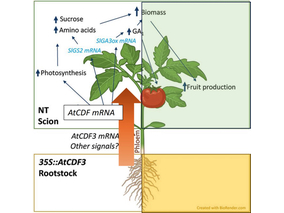
AtCDF3 gene induced greater production of sugars a...
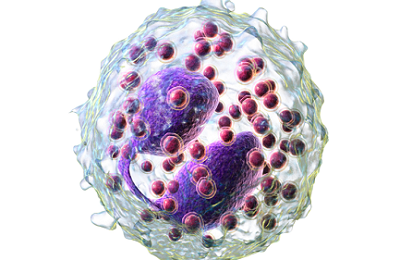
En nuestro post hablamos sobre este interesante tipo de célula del...

Telum Therapeutics, a biotechnology company leveraging proprietary met...