Co-authored by Jaume Capdevila, Medical Oncologist at the Vall d’Hebron University Hospital (HUVH) and Senior Investigator of the Vall d’Hebron Institute of Oncology’s (VHIO) Upper Gastrointestinal and Endocrine Tumor Group, results of the phase III NETTER-2 open-label, multi-center, randomized comparator-controlled trial demonstrate that first-line treatment with 177LU-DOTATATE combined with long-acting octreotide significantly improves progression-free survival (PFS) in patients with recently diagnosed somatostatin receptor-positive grade 2 and 3 advanced gastroenteropancreatic neuroendocrine tumors (GEP-NETs).
Findings from this study, selected as late breaking data (1) at the American Society of Clinical Oncology’s annual Gastrointestinal Cancers Symposium (ASCO GI24), January 18-20 in San Francisco, have been published today at The Lancet journal.
Neuroendocrine tumors (NETs) are a type of cancer that originate in neuroendocrine cells throughout the body and are commonly considered slow-growing malignancies. However, some NETs are associated with rapid progression and poor prognosis and in many cases, diagnosis is delayed until patients have advanced disease. Even though NETS are a rare disease, their incidence has grown by over 500% in the last three decades and there is an urgent need for additional treatment options for patients recently diagnosed with inoperable or advanced disease.
“Currently, there is no universally accepted first-line therapy for high grade, well-differentiated gastroenteropancreatic neuroendocrine tumors,” observes Jaume Capdevila. “Radioligand therapy is an innovative targeted cancer treatment that uses the specific characteristics of tumor cells as the basis for its mechanism of action so that radiation primarily affects tumor cells with minimal toxicity to healthy cells.”
Mechanism of Action 177LU-DOTATATE
177LU-DOTATATE consists of a radioactive isotope, lutetium-177, linked to dotatate—a molecule that attaches to GEP-NET cells that have a type of molecule called somatostatin receptor on the cell surface. The drug penetrates these tumor cells with somatostatin receptors and the radiation emitted by lutetium-177 helps to destroy the cancer cells.
A total of 226 patients with recently diagnosed somatostatin receptor-positive high grade 2 or grade 3 (Ki-67 ≥10% and ≤55%) advanced GEP-NETs participated in the NETTER-2 trial. The overall response rate of patients who received the radiopharmaceutical combination was 43% versus 9.3% in the control arm. Median PFS was 22.8 months and 8.5 months, respectively.
With these results, NETTER-2 is the second phase III trial to show clinically significant results for patients. The approval of 177LU-DOTATATEin 2018 was originally based on the pivotal NETTER-1 study, which demonstrated significant and clinical meaningful PFS prolongation for patients with grade 1 and 2 inoperable midgut neuroendocrine tumors who were progressing despite standard treatment.
“NETTER-2 is the first clinical trial to assess first-line targeted radioligand therapy in solid tumors. Our results point to a change in clinical practice for patients with recently diagnosed advanced gastroenteropancreatic neuroendocrine tumors which are more aggressive than low-grade classical neuroendocrine tumors and support additional studies evaluating targeted radioligand therapy as a treatment option for other settings,” concludes Capdevila.
###
References: Simron Singh MD a, Daniel Halperin MD b, Sten Myrehaug MD a, Ken Herrmann MD c d, Prof Marianne Pavel MD e, PamelaL Kunz MD f, Beth Chasen MD b, Salvatore Tafuto MD g, Secondo Lastoria MD h, Jaume Capdevila MD i, Amparo GarcíaBurillo MD i, DoYoun Oh MD j, Changhoon Yoo MD k, Thorvardur R Halfdanarson MD l, Stephen Falk MD m, Ilya Folitar MD n, Yufen Zhang PhD o, Paola Aimone MD n, Wouter W de Herder MD p, Diego Ferone MD q. [177Lu]Lu-DOTA-TATE plus long-acting octreotide versus high‑dose long-acting octreotide for the treatment of newly diagnosed, advanced grade 2–3, well-differentiated, gastroenteropancreatic neuroendocrine tumours (NETTER-2): an open-label, randomised, phase 3 study. The Lancet, 2024 June5

La mejor actitud que podemos adoptar es la de trat...

The research team observed changes in head circumf...
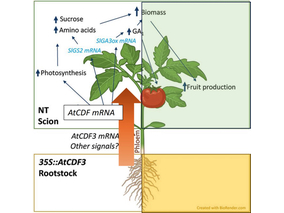
AtCDF3 gene induced greater production of sugars a...
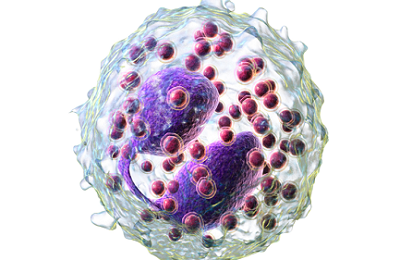
En nuestro post hablamos sobre este interesante tipo de célula del...

Telum Therapeutics, a biotechnology company leveraging proprietary met...