Molecular biology laboratories rely on clear nucleic acid visualization after electrophoresis. Researchers use this step to confirm PCR results, assess nucleic acid integrity, and document experimental outcomes. The staining method directly affects image quality and result interpretation.
GreenSafe DNA Gel Stain is a Nucleic Acid Gel Stain developed for routine electrophoresis workflows. It supports nucleic acid detection while keeping protocols simple and consistent. Laboratories can integrate it into existing workflows without modifying equipment or procedures.
The Role of Nucleic Acid Gel Stains in Routine Workflows
A Nucleic Acid Gel Stain binds to DNA or RNA and emits fluorescence under specific excitation conditions. This signal allows researchers to visualize fragments after electrophoretic separation.
Laboratories commonly use these stains to:
Because these applications occur daily in many labs, the staining reagent must deliver reliable and repeatable results.
Technical Characteristics of GreenSafe DNA Gel Stain
GreenSafe DNA Gel Stain provides consistent fluorescence for nucleic acid detection. The formulation supports visualization of double-stranded DNA, single-stranded DNA, and RNA.
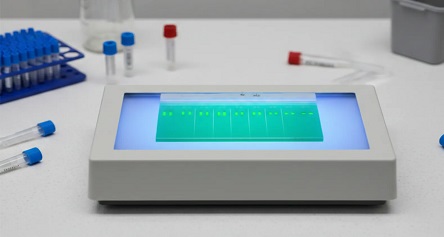
The stain shows optimal excitation around 490 nm and emits fluorescence near 530 nm. These properties make it compatible with standard UV and blue-light transilluminators. Most laboratories can therefore use GreenSafe without changing their imaging systems.
Canvax supplies GreenSafe as a 25,000× concentrated solution. This format allows researchers to stain many gels using small reagent volumes. The concentrated format also supports cost control and efficient inventory management.
Compatibility With Agarose and Polyacrylamide Gels
GreenSafe DNA Gel Stain works with both agarose and polyacrylamide gels. This compatibility covers the majority of electrophoresis applications in molecular biology laboratories.
In agarose gels, GreenSafe enables clear visualization of DNA and RNA across common fragment sizes. In polyacrylamide gels, it supports detection of smaller fragments and higher-resolution separations. Laboratories can therefore rely on a single Nucleic Acid Gel Stain for multiple gel formats.
Flexible Staining Options: Pre-staining and Post-staining
GreenSafe DNA Gel Stain supports both pre-staining and post-staining workflows.
For pre-staining, researchers add the stain directly to the molten gel before casting. This approach stains nucleic acids during electrophoresis and reduces post-run handling steps.
For post-staining, researchers immerse the gel in a staining solution after electrophoresis. This option suits laboratories that prefer selective staining or work with different gel thicknesses.
These two approaches give laboratories flexibility without adding complexity to standard protocols.
Handling and Storage Recommendations
GreenSafe DNA Gel Stain supports routine laboratory handling. Users should protect the reagent from light and store it between 2 °C and 25 °C. Refrigerated storage supports longer-term stability.
The non-toxic and non-mutagenic classification simplifies daily handling. Laboratories can integrate the stain into shared facilities and teaching environments while maintaining safe working conditions.
Compatibility With Downstream Applications
After visualization, researchers can excise nucleic acid bands stained with GreenSafe. Standard purification methods remain compatible with the stain.
The recovered DNA or RNA supports downstream applications such as cloning, sequencing, and enzymatic reactions. GreenSafe therefore fits both analytical and preparative electrophoresis workflows.
A Practical Nucleic Acid Gel Stain for Everyday Use
GreenSafe DNA Gel Stain meets the core requirements of a modern Nucleic Acid Gel Stain. It combines sensitivity, compatibility, and ease of use in a single solution.
Its concentrated format, flexible staining options, and broad gel compatibility make it suitable for routine electrophoresis work. Laboratories can adopt GreenSafe without altering established workflows.

La mejor actitud que podemos adoptar es la de trat...

The research team observed changes in head circumf...
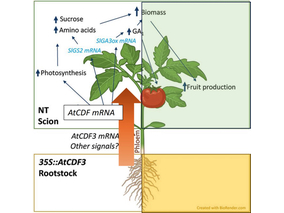
AtCDF3 gene induced greater production of sugars a...
En nuestro post hablamos sobre este interesante tipo de célula del...

Telum Therapeutics, a biotechnology company leveraging proprietary met...