Researchers from the Spanish National Research Council (CSIC), IrsiCaixa and the Instituto de Investigación Sanitaria del Hospital 12 de Octubre, have identified a mechanism that facilitates the entry of the human immunodeficiency virus (HIV) into immune system cells. The study, published in the journal eLife, shows how the gp120 protein in the viral envelope reorganises the structure of the CXCR4 chemokine receptor on the cell membrane to facilitate the virus’s entry.
HIV uses two proteins from its envelope as a key to access human cells: gp120 and gp40. These, in turn, interact with two key molecules on the cell surface. One is the CD4 receptor, present on immune system cells. However, it also requires a second co-receptor on the membrane—either the chemokine receptors CCR5 (in macrophages) or CXCR4 (in T cells)—to infect the cell. Although the viruses that typically enter the body tend to use CCR5, those that utilise CXCR4 are responsible for a more rapid and severe progression of the disease.
The group led by Mario Mellado, at the National Centre for Biotechnology (CNB-CSIC), studies the role of CXCR4, the receptor for the chemokine CXCL12, in cell migration. In inflammatory processes, chemokines serve to attract immune system cells to the inflamed area. “The cell’s CXCR4 molecules aggregate at the cell’s leading edge to effectively guide its movement to the place where its function is needed; it is like the ‘nose’ that guides the cell’s direction,” explains Mellado.
To better understand the mechanism of interaction between viral proteins and CXCR4, Mellado’s team and their collaborators at IrsiCaixa and the Instituto de Investigación Sanitaria del Hospital 12 de Octubre, used various tools: the soluble viral protein, non-infectious viral particles expressing viral envelope proteins on their surface, and primary viruses. In all cases, they observed that the viral protein induces the formation of CXCR4 aggregates on the cell membrane, which enables the virus to enter and cause infection.
Modification of a cellular mechanism allows viral entry
The virus uses the receptors present on the cell membrane, but also reorganises them to increase the efficiency of the infection. “Unlike what happens with receptor aggregation promoted by its natural ligand, in this case, the aggregation involves both CXCR4 and CD4, and the mechanisms involved are different,” explains Adriana Quijada, first author of the paper and a researcher at the CNB-CSIC.
To corroborate this hypothesis, they also used a natural variant of CXCR4 that causes WHIM syndrome (a severe immunodeficiency) in which the receptors do not aggregate, and the cells do not move in the direction of the gradient. With this approach, they have discovered that T lymphocytes carrying this CXCR4 variant do become infected by HIV, because in this situation, the virus itself promotes the aggregation of the receptors on the cell surface.
“That’s right,” notes Mellado, “in HIV infection, the interaction of the envelope protein with CD4 and CXCR4 causes conformational changes in the CD4/CXCR4 complex. Even if the CXCR4 molecule is the WHIM variant, these changes still occur and the virus can infect the cells. This finding indicates that patients with WHIM syndrome can become infected with HIV, something that was previously unknown.”
These results demonstrate how the virus’s binding to cell receptors triggers a highly specialised reorganisation of these receptors to facilitate entry into the cell, and point to the CD4/CXCR4 interaction as a new therapeutic target for the application of infection inhibitors.
Scientific Reference: Adriana Quijada-Freire, César A Santiago, Eva M García-Cuesta, Blanca Soler-Palacios, Rosa Ayala-Bueno, Sofía R Gardeta, Enara San Sebastián, Eva Armendariz-Burgoa, María C Puertas, Ricardo Villares, Urtzi Garaigorta, Luis Ignacio González-Granado, José Miguel Rodríguez-Frade, Jakub Chojnacki, Javier Martínez-Picado, Mario Mellado. HIV-1 Envelope glycoproteinmodulates CXCR4 clustering and dynamics on the T cell membrane. eLife 2026, DOI: https://doi.org/10.7554/eLife.110354.2
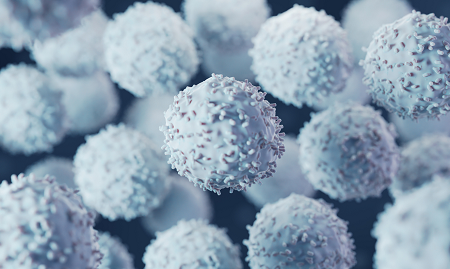
Image: Lymphocytes such as T-cells. Author: Artur Plawgo, iStock
CNB-CSIC Communication

La mejor actitud que podemos adoptar es la de trat...

The research team observed changes in head circumf...
AtCDF3 gene induced greater production of sugars a...
En nuestro post hablamos sobre este interesante tipo de célula del...

Telum Therapeutics, a biotechnology company leveraging proprietary met...