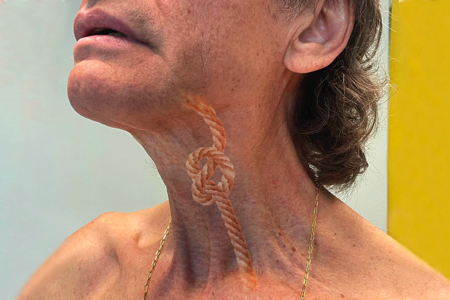
Group researchers A02-Take care: Oncology Care and Advances in Sports Medicine from the Biosanitary Research Institute of Granada (ibs.GRANADA) and the University of Granada, have revealed some of the factors that influence the degree of dysphagia suffered by patients diagnosed with head and neck cancer. Dysphagia, or difficulty swallowing, is a common symptom in survivors of this type of cancer after receiving cancer treatment, and represents a significant risk of complications that can significantly affect their general health and well-being.
In this cross-sectional study, in which researchers from the groups participated TECE20-Rehabilita-T: Advances and innovation in rehabilitation and health promotion y A06-Clinical Oncology and Liquid Biopsy from ibs.GRANADA, a sample of 62 head and neck cancer survivors was included to analyze both the prevalence of dysphagia and the factors that could influence the presence of this sequelae. In addition to evaluating dysphagia, other sociodemographic and clinical variables such as cough, sticky saliva, range of oral mobility, sleep hygiene, perceived physical function and muscle mass were examined, with the aim of identifying which factors best explain the degree of dysphagia in these patients.
The study, carried out with patients recruited from the Radiation Oncology Services of the Virgen de las Nieves University Hospital and the San Cecilio Clinical University Hospital (Granada, Spain) between 2018 and 2022, found that the vast majority of patients presented dysphagia, evaluated by a validated questionnaire. The main findings indicated that about half of the variability in dysphagia could be explained by factors such as cough, limited oral mobility, and poor sleep quality, with oral mobility being the most limiting factor.
These results underscore the importance of early and appropriate identification of these symptoms, as well as a comprehensive treatment strategy to address sequelae in head and neck cancer survivors following oncological treatments. Dr. Noelia Galiano, researcher of the group A02-Take care: Oncology Care and Advances in Sports Medicine and leader of this study, commented: “Identifying these factors associated with dysphagia is crucial to guide health professionals in better detection and follow-up, especially in those patients at higher risk.”
About the research groups
The research group A02-Take care: Oncology Care and Advances in Sports Medicine of ibs.GRANADA is multidisciplinary and its main objective is to describe evidence on the effectiveness of physiotherapy and nursing in the management of chronic pain and other alterations derived from oncological treatment. They have a small laboratory equipped with FEDER funds that is part of the Joint University Sports and Health Institute, which is a reference for some international groups, in relation to the immune and hormonal response to chronic pain.
More information about the group at: https://www.ibsgranada.es/grupos-de-investigacion/a02-cuidate-cuidados-oncologia/
The research group A06Clinical Oncology and Liquid Biopsy of ibs.GRANADA, led by José Expósito and co-directed by María José Serrano, maintains stable connections with groups in the area, at the regional and national level. Its intention is to relate clinical and basic knowledge into useful guidance for patients and for the evaluation of health services. His lines of research are circulating and diverse tumor cells, diet, physical exercise and cancer, evaluation of results in cancer, response modification through mesenchymal cells, single and fractionated dose radiosurgery, radiotherapy with modified schemes (breast , lung, and others) and the variability in oncological practice (radiotherapy).
More information about the group at https://www.ibsgranada.es/grupos-de-investigacion/a06-oncologia-clinica-biopsia-liquida/
El grupo TECE20-Rehabilita-T: Advances and Innovation in Rehabilitation and Health Promotion from ibs.GRANADA works in three lines of research: Telerehabilitation, Functional Assessment in Rehabilitation and Social and Health Care for Caregivers of Dependent Patients. We consider that these areas are especially relevant within the field of Physical Medicine and Rehabilitation, allowing the development of various projects that could have a direct impact on daily clinical activity. This would improve patient care and, consequently, offer better health quality.
More information about the group at https://www.ibsgranada.es/grupos-de-investigacion/tece20-rehabilita-t/
Bibliographic reference:
López-Fernández, MD, Fernández-Lao, C., Ruíz-Martínez, AM, Fernández-Gualda, M. Á., Lozano-Lozano, M., Ortiz-Comino, L., & Galiano-Castillo, N. ( 2024). Exploring predictors of dysphagia in survivors of head and neck cancer: A cross-sectional study. In Supportive Care in Cancer (Vol. 32, Issue 3). Springer Science and Business Media LLC. https://doi.org/10.1007/s00520-024-08358-w

La mejor actitud que podemos adoptar es la de trat...

The research team observed changes in head circumf...
AtCDF3 gene induced greater production of sugars a...
En nuestro post hablamos sobre este interesante tipo de célula del...

Telum Therapeutics, a biotechnology company leveraging proprietary met...