The Clinical and Translational Research Group in Digestive Diseases at the Marqués de Valdecilla Research Institute (IDIVAL) has just published an article in the Revista Española de Enfermedades Digestivas, reviewing and updating current knowledge on the calcitonin gene-related peptide (CGRP) and its role in the bidirectional communication between the central nervous system and the gastrointestinal tract, known as the gut-brain axis.
A neuropeptide is a small molecule that acts as a chemical messenger between neurons and other cells, modulating functions such as pain, digestion, or stress response. In this study, CGRP emerges as a key player, with a versatile, chameleon-like behavior, in the communication between the gut and the brain.
The work, led by first author Marta Pascual Mato, was carried out in collaboration with the Headache and Other Non-Degenerative Neurological Diseases Research Group, offering a comprehensive perspective on the effects of the two isoforms of this neuropeptide, particularly beta-CGRP, on intestinal homeostasis and the pathophysiology of digestive disorders.
In recent years, both groups have demonstrated that beta-CGRP plays a protective role in the intestinal mucosa, modulating processes such as gastrointestinal motility, local immune response, and neurogenic inflammation. Previous studies had already shown that the release of beta-CGRP explains diarrhea in COVID-19 patients, that in the early stages of inflammatory bowel diseases (Crohn’s disease and ulcerative colitis) there is a decrease in this isoform — suggesting its protective effect — and that a reduction in beta-CGRP accounts for constipation in migraine patients treated with anti-CGRP monoclonal antibodies.
This new article not only reviews these findings but also explores the translational potential of monitoring CGRP levels in various comorbid digestive and neurological diseases, such as irritable bowel syndrome, chronic migraine, or functional constipation.
Read the full article: Calcitonin gene-related peptide (CGRP) in the pathophysiology of gastrointestinal disorders – A key mediator in the gut-brain axis. DOI: 10.17235/reed.2025.11310/2025
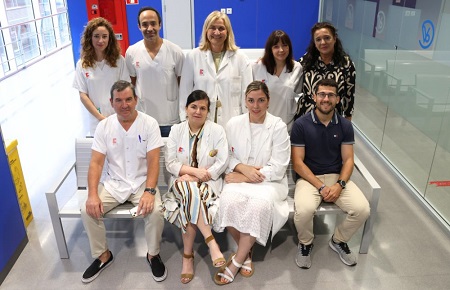
Image: The research team responsible for the article, made up of researchers from the Clinical and Translational Research Group in Digestive Diseases and the Headache and Other Non-Degenerative Neurological Diseases Research Group.

La mejor actitud que podemos adoptar es la de trat...

The research team observed changes in head circumf...

AtCDF3 gene induced greater production of sugars a...

En nuestro post hablamos sobre este interesante tipo de célula del...

Telum Therapeutics, a biotechnology company leveraging proprietary met...