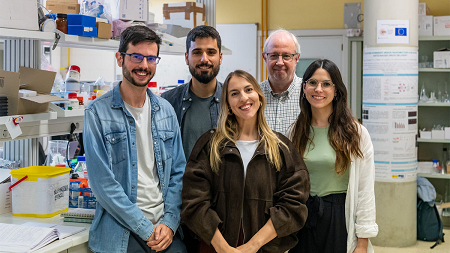
A team from the Universitat Politècnica de València (UPV), part of the Inter-University Institute for Molecular Recognition and Technological Development (IDM, UPV-UV), has led the development of a new strategy that seeks to harness immunity to the measles virus to fight cancer. The study demonstrates, in experimental models, that it is possible to reprogram the body's defences to recognise and destroy tumour cells effectively. The technique is based on the use of lipid nanoparticles (LNPs) capable of delivering messenger RNA to cancer cells, inducing the expression of a viral protein recognisable by the immune system.
The research also involved the CIBER for Bioengineering, Biomaterials and Nanomedicine (CIBER-BBN), the UPV-IIS La Fe Joint Research Unit in Nanomedicine and Sensors, the UPV-CIPF Joint Research Unit on Disease Mechanisms and Nanomedicine, and the IMed – Research Institute for Medicines at the University of Lisbon.
Making tumour cells visible to the immune system
As Ramón Martínez Máñez from the IDM (UPV) explains, many tumours evade the immune system because they do not display clear signals that allow them to be identified. To address this, they have designed a nanoparticle-based strategy that marks tumour cells with a signal the body already recognises, thanks to the measles vaccination, thereby activating an immune response.
This immune activation was key to the observed therapeutic effect. "The expression in tumour cells of a measles virus protein simultaneously activates antibodies and cytotoxic T cells, which are directly responsible for eliminating tumour cells," explains Javier Martínez-Latorre, first author of the study and also a researcher at the IDM (UPV). In experimental melanoma models, this activation resulted in a significant reduction in tumour growth only in animals previously vaccinated against measles, whereas no effects were observed in the control groups or in unvaccinated animals. Analyses confirmed that tumours treated with the nanoparticles showed increased lymphocyte infiltration, greater cytotoxic activity and increased tumour cell death, all without significant toxic effects on the body, reinforcing the strategy's potential for future clinical applications.
Strong immune response with broad therapeutic potential
Beyond the antitumour effect observed, the researchers highlight that the distinctive value of the work lies in harnessing the immune memory generated by vaccination, a resource hitherto little explored in cancer immunotherapy.
"One of the most notable aspects of this strategy is its potential for global application. Immunity to measles is widespread thanks to vaccination programmes, which would allow this approach to be extended to a large number of patients, potentially including those with different types of tumours," explains Alba García-Fernández, a researcher at the UPV-IIS La Fe Joint Unit.
The RNA- and nanoparticle-based technology is highly modular, allowing it to be adapted to other viruses and targeted at different types of cancer. "Following the positive results in experimental models, the next step will be to extend the strategy to other types of tumours, optimise the scalability of the nanoparticles, and evaluate combinations with other cancer treatments to enhance their efficacy," concludes Ramón Martínez Máñez.
Reference: Martínez-Latorre, J., Soriano-Teruel, P.M., Candela-Noguera, V. et al. Harnessing pre-existing measles immunity: mRNA-Lipid nanoparticle-mediated measles hemagglutinin expression boosts antitumor CD8? T cell responses. Sig Transduct Target Ther 11, 164 (2026). https://doi.org/10.1038/s41392-026-02716-2

La mejor actitud que podemos adoptar es la de trat...

The research team observed changes in head circumf...

AtCDF3 gene induced greater production of sugars a...

En nuestro post hablamos sobre este interesante tipo de célula del...

Telum Therapeutics, a biotechnology company leveraging proprietary met...