From treatment-resistant tumors to incurable autoimmune diseases, recent medical breakthroughs are achieving remissions that would have seemed impossible just a few years ago. A striking example is the recent case of a Spanish girl who went into remission from an extremely rare and severe form of autoimmune dermatomyositis, thanks to CAR-T therapy—highlighting the scope of this medical revolution.
Traditionally, cancer has been treated by removing tumors surgically, administering chemotherapy, or using radiation to destroy cancer cells. But a new approach is transforming the rules of cancer therapy: immunotherapy.
What is immunotherapy?
Unlike conventional treatments that directly target tumors, immunotherapy aims to boost the patient’s own immune defenses. Think of it as specialized training for your immune system—teaching it to identify and eliminate cancer cells more effectively.
Imagine the immune system as an army that sometimes fails to detect the enemy (cancer) because the enemy is well-camouflaged. Immunotherapy acts like a coach, helping that army recognize and combat cancer more efficiently.
Thanks to rapid scientific advances, immunotherapy is ushering in a new era of medicine—one that is more personalized, longer-lasting, and filled with new hope.
Immunotherapy encompasses a variety of treatments designed to activate or restore the immune system’s ability to fight cancer. Key strategies include:
Each of these methods operates differently, but they all share a common goal: to reawaken the immune system’s ability to respond quickly, specifically, and powerfully against cancer.
Recent scientific evidence
One of the most promising developments has been the use of bispecific antibodies in blood cancers. A 2025 study published in The New England Journal of Medicine evaluated the combination of talquetamab and teclistamab in patients with relapsed or refractory multiple myeloma. The combination achieved an 80% response rate—even in patients with extramedullary disease—with 86% of responses lasting at least 18 months.
In solid tumors, another study demonstrated the efficacy of amivantamab, a bispecific antibody targeting EGFR and MET, when combined with chemotherapy. It showed significant improvement in progression-free survival in patients with non-small-cell lung cancer harboring EGFR exon 20 insertions—a subgroup historically resistant to targeted therapies.
Beyond cancer: CAR-T for autoimmune diseases
Although CAR-T therapies were originally developed for blood cancers, their potential is expanding into other fields, including autoimmune diseases. One remarkable case has drawn global attention: an 11-year-old girl with anti-MDA5 dermatomyositis—a rare and life-threatening autoimmune condition—achieved full remission after receiving CAR-T therapy developed in Spain.
Administered at Hospital Universitario La Paz, the treatment used ARI-0001, a CAR-T therapy developed by Hospital Clínic de Barcelona. Her T cells were modified to target B cells, the culprits in her autoimmune response. Previously reliant on mechanical ventilation and heavy immunosuppression, she now breathes unaided and no longer needs medication. This breakthrough represents a milestone in extending immunotherapy beyond cancer and opens new therapeutic avenues for hard-to-treat autoimmune conditions.
Advantages over traditional treatments
Unlike chemotherapy, which targets all fast-dividing cells—including healthy ones—immunotherapy works with greater precision. It’s designed to help the immune system selectively eliminate only diseased cells, often resulting in fewer systemic side effects.
A major strength of immunotherapy is its use in advanced or metastatic cases where other treatments have failed. In many such instances, it has achieved long-lasting responses—even in terminal stages.
That said, it’s important to acknowledge that immunotherapy doesn’t work for every patient, and some may experience immune-related side effects such as colitis or pneumonitis.
Looking ahead: precision immunotherapy
The future lies in precision immunotherapy—tailoring treatment to the tumor’s genetic and immune profile. New generations of CAR-T are being developed for solid tumors and autoimmune diseases, alongside combination strategies that integrate immunotherapy with radiation or gut microbiome modulation.
At Sermes CRO, as specialists in clinical research and advanced therapies, they closely monitor these breakthroughs to offer innovative, evidence-based solutions to their clients.
By Lola Pérez, Director of Quality Assurance at Sermes CRO, with expertise in Advanced Therapy Clinical Trials
Cohen, Y. C., et al. (2025). Talquetamab plus Teclistamab in Relapsed or Refractory Multiple Myeloma. The New England Journal of Medicine, 392(2), 138–149. https://doi.org/10.1056/NEJMoa2406536
Zhou, C., et al. (2023). Amivantamab plus Chemotherapy in NSCLC with EGFR Exon 20 Insertions. The New England Journal of Medicine, 389(21), 2039–2051. https://doi.org/10.1056/NEJMoa2306441
Martínez-Llordella, M., et al. (2025). CD19-targeted CAR-T cells induce remission in a child with anti-MDA5 juvenile dermatomyositis. Nature Medicine.

La mejor actitud que podemos adoptar es la de trat...

The research team observed changes in head circumf...
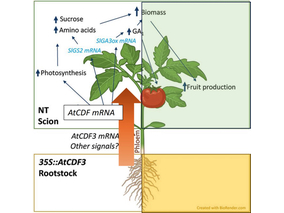
AtCDF3 gene induced greater production of sugars a...
En nuestro post hablamos sobre este interesante tipo de célula del...

Telum Therapeutics, a biotechnology company leveraging proprietary met...