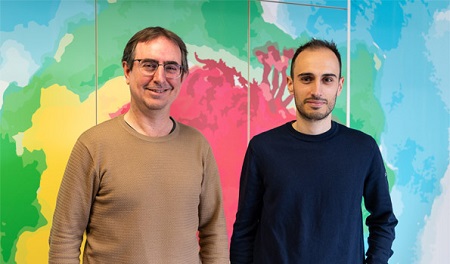
Researchers from the Medical Image Analysis (MIA-LAB) group at the ITACA Institute of the Universitat Politècnica de València (UPV), have developed an artificial intelligence method capable of synthesising high-quality magnetic resonance imaging (MRI) without the need to perform all the usual sequences.
This new method will enable faster, more efficient and more economical MRI scans, thus contributing to improved detection of neurological diseases. The next challenge for the team is to extend the technique to other sequences such as FLAIR (Fluid Attenuated Inversion Recovery), a variant of T2 imaging that eliminates the cerebrospinal fluid signal and allows lesions associated with diseases such as Alzheimer's, multiple sclerosis or brain tumours to be highlighted with great clarity.
The work, published in the journal Imaging Neuroscience, has been led by José V. Manjón, Sergio Morell-Ortega y Marina Ruiz-Pérez.
Deep 3D neural network
This new method developed in the ITACA-UPV laboratories is based on a deep 3D neural network that generates T2 images—highly sensitive to the presence of water, allowing the detection of oedema, inflammation, or ischaemia—from T1 images, which provide a detailed anatomical representation of the brain and allow for a clear differentiation between white matter and grey matter. In this way, T1 images provide the ‘structure’, while T2 and FLAIR images highlight possible pathological alterations.
To do this, the system integrates prior anatomical information and uses semi-supervised learning techniques, an artificial intelligence approach that combines a small number of medical images labelled by specialists with a large volume of unlabelled images, allowing powerful models to be trained without the need for fully annotated databases.
‘In an MRI scan, each type of image provides different information about the brain, but obtaining them all lengthens the test, makes the process more expensive and can be uncomfortable. Our system allows us to generate the missing images from those already acquired, reducing time and resources,’ explains Sergio Morell, lead author of the study.
Innovation and international validation
The method led by UPV researchers combines real anatomical knowledge, specific training strategies and a semi-supervised approach that improves its generalisation capacity across different patients and scans. In brain segmentation tests, it outperformed the most advanced techniques available, even in complex cases such as brains with lesions or high anatomical variability. In addition, it generates results in a matter of seconds, facilitating its application in hospital settings.
The study involved Marina Ruiz-Pérez, Marien Gadea, Roberto Vivo-Hernando, Gregorio Rubio, Fernando Aparici, Mariam de la Iglesia-Vayá, as well as researchers from the University of Bordeaux and the CNRS. It was funded by the Spanish Ministry of Science, Innovation and Universities and the French National Research Agency.
Reference: Sergio Morell-Ortega, Marina Ruiz-Pérez, Marien Gadea, Roberto Vivo-Hernando, Gregorio Rubio, Fernando Aparici, Mariam de la Iglesia-Vaya, Thomas Tourdias, Boris Mansencal, Pierrick Coupé, José V. Manjón. Robust deep MRI contrast synthesis using a prior-based and task-oriented 3D network. Imaging Neuroscience.

La mejor actitud que podemos adoptar es la de trat...

The research team observed changes in head circumf...
AtCDF3 gene induced greater production of sugars a...
En nuestro post hablamos sobre este interesante tipo de célula del...

Telum Therapeutics, a biotechnology company leveraging proprietary met...