Although most children overcome COVID-19 without serious complications, more than 10% develop persistent symptoms that can last for months and significantly affect their quality of life. The biological mechanisms of this condition, known as long COVID, have so far been little studied in the pediatric population. In this context, a team from IrsiCaixa –a center jointly promoted by the “la Caixa” Foundation and the Department of Health of the Government of Catalonia– has, for the first time, described in depth the immune alterations associated with pediatric long COVID. The study, published in the scientific journal JCI Insight, reveals a dysregulation of the first line of defense against the virus and a reduced capacity to generate effective antibodies against SARS-CoV-2. In addition, among the different markers analyzed using computational tools, the team demonstrated that the CCR6 molecule is expressed in a clearly different way between children with and without the condition, positioning it as a potential biological marker of the disease.
“These results propose markers to identify which children have long COVID. Moreover, understanding the associated immune alterations allows us to begin thinking about strategies to reverse them and, potentially, treat this condition,” highlights Sara Morón-López, associate researcher at IrsiCaixa and leader of the project, which has been funded by the legacy of the Germans Trias i Pujol Research Institute (IGTP), the Barcelona City Council, and the European project UNDINE.
An altered initial response to infection and reduced antibody production
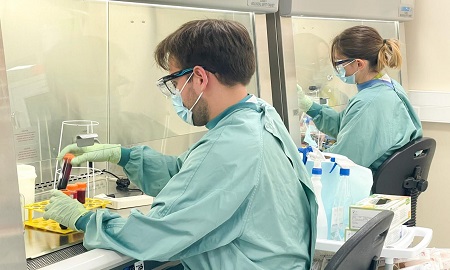
The research was carried out within the pediaCOVID cohort of the Germans Trias i Pujol Hospital , which in 2021 launched the first pediatric long COVID functional unit in Catalonia, and included 99 children with long COVID and 18 without the condition. All participants were evaluated three months after acute SARS-CoV-2 infection. “We conducted an in-depth study of their immune system. Using blood samples, we analyzed dozens of cell populations and molecules involved in each patient’s immune response,” explains Jon Izquierdo-Pujol, predoctoral researcher at IrsiCaixa and first author of the article.
The results show that children with long COVID present an alteration of innate immunity, the first line of defense against the virus and the system that coordinates and activates the rest of the responses. “This first response acts as an alarm system: it mobilizes immune cells to the site of infection and initiates the defensive strategy. In these children, we believe this activation does not occur properly,” notes Morón-López. According to the research team, this dysregulation could be affecting the adaptive response, which is more specific against SARS-CoV-2. “In fact, one of the most relevant findings –and one we describe for the first time in the pediatric population with long COVID– is that these young individuals have lower levels of antibodies with neutralizing capacity, that is, capable of effectively blocking the virus, one of the key functions of the adaptive response,” adds Izquierdo-Pujol.
A step toward more precise diagnostics and treatments
Using computational models that integrated all analyzed immunological parameters, the team identified the CCR6 molecule as the factor with the greatest ability to differentiate between the two groups. Children with long COVID showed lower expression of this molecule, which is essential for directing immune cells to the site of infection and coordinating an adequate response. In the predictive model developed by the research team, CCR6 identified cases with 79% accuracy. This result positions CCR6 as a potential objective biomarker to aid in the diagnosis of a condition that is currently based mainly on clinical criteria and the persistence of symptoms.
Long COVID is estimated to affect millions of people worldwide. However, COVID-19 is not the only infection capable of triggering a post-viral syndrome. “Understanding what lies behind persistent symptoms after an infection not only allows us to recognize and validate the disease in children with long COVID, but also opens the door to exploring whether these alterations are shared with other post-viral syndromes,” concludes Javier Martínez-Picado, ICREA researcher at IrsiCaixa.

La mejor actitud que podemos adoptar es la de trat...

The research team observed changes in head circumf...
AtCDF3 gene induced greater production of sugars a...
En nuestro post hablamos sobre este interesante tipo de célula del...

Telum Therapeutics, a biotechnology company leveraging proprietary met...