
The constant evolution of SARS-CoV-2 makes it necessary to have effective prevention and treatment strategies, especially for the most vulnerable people. In this context, a study led by IrsiCaixa has developed a new molecule, called the ACE2-Fc fusion protein, capable of efficiently blocking the most evolved variants of the virus. The results, published in the scientific journal Protein Science, describe an innovative strategy that, instead of relying on viral proteins, uses a human protein as a “bait,” allowing efficacy to be maintained despite viral evolution. The study was conducted in collaboration with the IRTA-CReSA Animal Health Research Center and the Barcelona Supercomputing Center-Centro Nacional de Supercomputación (BSC-CNS).
ACE2-Fc: a fusion between the ACE2 receptor and an antibody fragment
To enter cells, SARS-CoV-2 uses the Spike protein on its surface, which binds to the human ACE2 receptor. Based on this mechanism, the research team developed the ACE2-Fc fusion protein, which combines a portion of the ACE2 receptor with a constant fragment of an antibody. “This molecule acts as a ‘decoy receptor’: the virus binds to it thinking it is a cell, but in reality, once bound, it becomes blocked and cannot infect,” explains Ferran Abancó, predoctoral researcher at IrsiCaixa and first author of the study. “Additionally, adding the antibody fragment offers two potential benefits: greater stability and activation of the immune system to help eliminate the virus,” he adds.
To further enhance its efficacy, the team introduced mutations to improve ACE2’s affinity for the Spike protein, made the interaction more stable, and improved its accessibility. Thanks to these modifications, the ACE2-Fc protein achieves very high levels of neutralization, meaning it can block the virus at very low concentrations.
Maintained efficacy against viral evolution
One of the major advantages of this strategy is that it is based on a human molecule rather than a viral structure. This allows its effectiveness to be maintained despite the emergence of new variants, since SARS-CoV-2 still needs to bind to the ACE2 receptor to infect cells. The results have been confirmed both in assays with pseudoviruses—laboratory-created viruses that mimic the behavior of SARS-CoV-2 but cannot cause disease—and with authentic viruses. In both cases, ACE2-Fc has demonstrated a strong ability to prevent infection, including the most evolved variants, such as JN.1 and KP.2. “We have even seen that this molecule is capable of blocking variants against which other strategies, such as the Sipavibart antibodies, have lost effectiveness,” highlights Benjamin Trinité, associate researcher at IrsiCaixa.
A promising tool against COVID-19 and future coronaviruses
The research team points out that this type of molecule could become a promising alternative for the prevention and treatment of COVID-19, and could set a precedent for the treatment of other infectious diseases. “Having effective options is especially important for immunocompromised individuals, a particularly vulnerable group with limited therapeutic options,” notes Julià Blanco, principal investigator at IrsiCaixa and researcher at IGTP.
The fact that this strategy is based on the human receptor required for infection suggests that its effectiveness could be maintained over time, despite viral evolution. Additionally, a molecule like this could potentially block new pandemic-prone coronaviruses that use the ACE2 molecule as an entry point for infection. However, the team emphasizes that further studies on safety and clinical efficacy are necessary before these molecules can be used in patients.

La mejor actitud que podemos adoptar es la de trat...

The research team observed changes in head circumf...
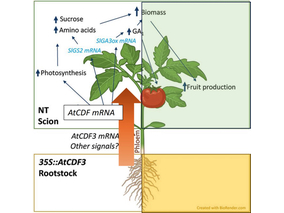
AtCDF3 gene induced greater production of sugars a...
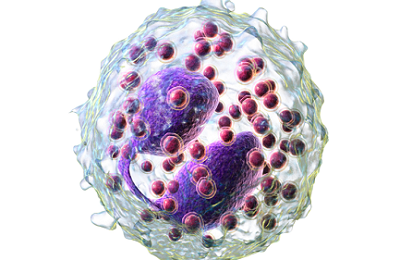
En nuestro post hablamos sobre este interesante tipo de célula del...

Telum Therapeutics, a biotechnology company leveraging proprietary met...