Can exercise change your life at 100? Several research teams from the University of Zaragoza, the IIS Biogipuzkoa (Basque Government Department of Health and Osakidetza), and CIBER have confirmed that physical exercise is not only beneficial in old age, but can transform the lives of even centenarians.
The research, published in the Journal of Cachexia, Sarcopenia and Muscle , is a global first and has confirmed that people's functional capacity , measured both with scales and biomarkers, can be maintained and improved with physical exercise even at the most advanced ages
The study was conducted on 19 centenarians , 12 of whom completed the training program, while the rest formed the control group. For three months , participants performed a strength training program using weights and their own body weight, twice a week, starting with 20-minute sessions and progressing to 40-45 minutes. The intervention group showed significant improvement on all frailty and functional capacity scales , as well as positive changes in biomarkers associated with frailty
The work was coordinated by Nuria Garatachea , tenured professor at the Faculty of Health and Sport Sciences and member of the Exer-GENUD group at the University of Zaragoza , and Ander Matheu , head of the Aging Area at the Biogipuzkoa Health Research Institute ( IIS Biogipuzkoa) of the Basque Government's Department of Health and Osakidetza (the Basque Health Service). It involved the participation of several teams from the Biomedical Research Networking Center (CIBER) and the Geriatrics Departments of the Albacete and Toledo Hospitals , led by Doctors Pedro Abizanda and Leocadio Rodríguez Mañas, respectively.
Results reflected in daily life
"This study confirms that functional capacity can be maintained and improved with physical exercise, even at advanced ages," notes Dr. Matheu
“It’s never too late to start training ,” adds Aragonese researcher Nuria Garatachea , “and we have shown in this study that exercise changes your life even at these advanced ages. Although we cannot say that it extends their lifespan, it does improve their quality of life: autonomy, safety, and well-being.”
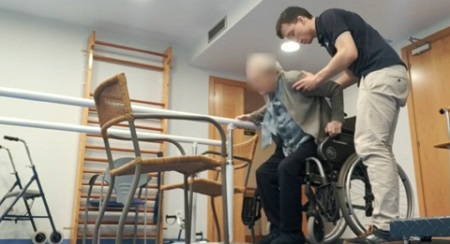
The research team highlights the participants' strong commitment. Beyond the data, the results are reflected in daily life. " You change their lives ," summarizes Dr. Garatachea. A 103-year-old man went from needing help to go to the bathroom to being able to get up on his own at night: "I can drink water now, because I can go to the bathroom by myself," one of the participants proudly recounted. A 102-year-old woman , who was initially in a wheelchair, regained enough strength to get up and sit down without assistance. "The important thing is how it improves their quality of life day to day. They go from being able to get out of their chairs to walking with a walker," emphasizes the specialist from the University of Zaragoza.
Centenarians are a population group that exhibits extreme longevity and tend to reach the final years of their lives more frail . Different studies in international populations have observed that interventions with physical exercise reverse frailty and improve the functional capacity of older adults
“Given that out of every 100,000 inhabitants, only 11 people are 100 years old or older , it is necessary to point out how complicated it was to reach the number of people needed for the study,” says Dr. Matheu
In the study, in addition to the functional impact, blood samples were analyzed to evaluate biomarkers associated with frailty . The results were clear: after the intervention, improvements were observed in the expression of some key markers, as well as in inflammatory cytokines . “These changes correlated with the functional improvement, confirming that exercise not only strengthens muscles but also modulates biological processes linked to aging and frailty,” explains Dr. Matheu.
“The best research model for healthy aging is centenarians,” concludes Dr. Garatechea. “People manage to reach 100 years of age because they are truly very healthy , and therefore, it is of great interest to study biomarkers and responses to interventions to identify protective factors against frailty.”
Population aging poses a challenge to the socio-economic and healthcare systems, and to society in general. The aging population is constantly increasing worldwide, especially in the most developed countries, and this growth is not expected to stop. Hence the importance of conducting this type of study to facilitate decision-making regarding population aging.
Collaborative work:
The research project was initiated in 2018 by the EXER-GENUD research group at the University of Zaragoza and continued with the exercise intervention in nursing homes in January 2020 , although the pandemic forced its interruption for a time
The study was expanded with biological analyses , and the current scientific publication is the result of three years of collaborative work with the Biogipuzkoa Health Research Institute . It was funded by grants from the Adinberri call of the Gipuzkoa Provincial Council, the Basque Government's Department of Health, the Carlos III Health Institute, and the CIBER Frailty and Healthy Aging areas.
Resistance Exercise Intervention Restores Functional Capacity and Improves Frailty Biomarkers in Centenarians
Marcos-Perez D, Hernandez-Vicente A, Cruces-Salguero S, Landa J, Bonvini M, Vicente-Rodriguez G, Pueyo E, Rodriguez-Mañas L, Abizanda P, Otaegui D, Garatachea N, Matheu A.
J Cachexia Sarcopenia Muscle. 2025 Oct;16(5):e70079. doi: 10.1002/jcsm.70079.PMID: 41036686

La mejor actitud que podemos adoptar es la de trat...
The research team observed changes in head circumf...
AtCDF3 gene induced greater production of sugars a...
En nuestro post hablamos sobre este interesante tipo de célula del...

Telum Therapeutics, a biotechnology company leveraging proprietary met...