A team of researchers led by the Institute for Bioengineering of Catalonia (IBEC) has developed light-activated derivatives of the anti-epileptic drug carbamazepine to treat neuropathic pain. These compounds, which show analgesic effects when activated by light, can inhibit nerve signals locally and on demand. Photopharmacological treatments offer precise action at the site of application, thus reducing systemic side effects.
Light can be used to activate drugs in specific parts of the body through photopharmacology. This innovative approach involves modifying the chemical structure of a drug by adding a light-activated molecular switch, such as azobenzene. This allows the drug to be activated only when exposed to a specific colour of light, rather than in the dark.
Based on these principles, a team of researchers led by the Institute for Bioengineering of Catalonia (IBEC) has developed photoswitchable derivatives of carbamazepine, an anti-epileptic drug widely used in medicine to combat some types of neuropathic pain, such as trigeminal neuralgia. These compounds, which have an analgesic effect when activated by light, are able to inhibit nerve signals locally and on demand. The derivatives synthesised by the researchers are activated at wavelengths corresponding to the amber colour, which allows them to pass through tissue and bone using conventional halogen lamps.
"When we illuminate larvae that have uptaken these compounds with a certain wavelength, the drug is activated and the larvae move faster. If we change the wavelength, their movement slows down again, demonstrating the reversible effect of the compound on the nervous system." Luisa Camerin
The two synthesised compounds, carbazopine-1 and carbadiazocine, show photopharmacological activity, allowing the activity of hippocampal neurons and the locomotion of zebrafish larvae to be reversibly controlled by light. These in vivo experiments make it possible to observe anxiety-related behaviours reflected in sudden swimming movements. IBEC researcher Luisa Camerin, first author of the study, explains: “When we illuminate larvae that have uptaken these compounds with a certain wavelength, the drug is activated and the larvae move faster. If we change the wavelength, their movement slows down again, demonstrating the reversible effect of the compound on the nervous system.”
Carbadiazocine has also been shown to have analgesic properties: “In rat models developed in the laboratory of Esther Berrocoso at the University of Cadiz, we have observed that carbadiazocine has an analgesic effect on neuropathic pain without any signs of anaesthesia, sedation or toxicity. These results demonstrate a simple and convincing treatment with non-invasive illumination,” explains Pau Gorostiza, ICREA research professor, principal investigator at IBEC and member of CIBER-BBN.
Neuropathic pain is caused by lesions or diseases of the somatosensory system, such as lumbar radiculopathy (“sciatica”), diabetic neuropathy and chronic post-operative pain. The treatment of this type of pain often requires opioids, which are stronger analgesics than the usual NSAIDs – such as paracetamol and ibuprofen. However, their use is controversial due to their inconsistent efficacy, the need for high doses that can lead to tolerance and addiction, and systemic side effects such as constipation, nausea, dizziness and drowsiness.
"In rat models developed in the laboratory of Esther Berrocoso at the University of Cadiz, we have observed that carbadiazocine has an analgesic effect on neuropathic pain without any signs of anaesthesia, sedation or toxicity. These results demonstrate a simple and convincing treatment with non-invasive illumination." Pau Gorostiza.
In this context, light-based therapies are becoming increasingly important in medicine because of their ability to target specific regions of the body, increasing treatment efficacy and reducing the side effects of systemic drugs.
The team is already working on the next step in this project, which will involve activating drugs using infrared light, which penetrates deeper into tissue, and using portable light sources such as lasers or light-emitting diodes (LEDs).
This study is part of the PHOTOTHERAPORT project, coordinated by the Institute for Bioengineering of Catalonia (IBEC). The project is funded by the prestigious Pathfinder Open programme of the European Innovation Council (EIC) and focuses on the development of luminescent implants and light-activated drugs for innovative neuromodulation therapies (HORIZON-EIC-2023 programme PATHFINDEROPEN-01, no. 101130883). PHOTOTHERAPORT is a consortium of 8 institutions from 4 countries with a budget of 3 million euros over 3 years to carry out the project.

La mejor actitud que podemos adoptar es la de trat...

The research team observed changes in head circumf...
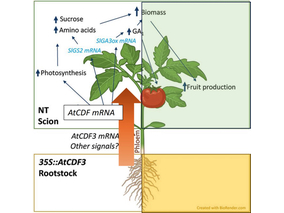
AtCDF3 gene induced greater production of sugars a...
En nuestro post hablamos sobre este interesante tipo de célula del...

Telum Therapeutics, a biotechnology company leveraging proprietary met...