

Non-severe traumatic brain injuries account for a large proportion of emergency department visits, but only a minority of patients develop clinically significant complications within the first 48 hours. “Early identification of patients at higher risk remains a key clinical challenge in order to optimize discharge decisions, clinical monitoring, and the use of computed tomography scans,” explains Oriol Yuguero, head of the ERLab research group at IRBLleida.
The Goliath score was developed from a consecutive cohort study of adults with mild or moderate TBI (Glasgow Coma Scale score 13–15) treated between June 2019 and December 2020 in the emergency department of a hospital in Lleida. The model integrates variables that can be obtained within 6 hours, such as age, history of hypertension, platelet count, systolic blood pressure, anticoagulant therapy, serum levels of the S100B protein, and clinical indicators of high severity—such as fluctuations in the GCS or pupillary abnormalities—to predict the likelihood of neurological or cardiorespiratory complications and mortality within the first 48 hours.
The results show that the Goliath score is able to discriminate between high- and low-risk patients for the development of complications. “The model has shown similar performance across age and sex subgroups, although it requires prospective external validation before it can be routinely applied in clinical practice,” Yuguero added.
This study represents a significant step toward the development of simple yet robust clinical predictive models that integrate demographic, laboratory, and clinical data available immediately to improve the care of patients with mild to moderate traumatic brain injury in emergency departments. The project was funded by the Mutua Madrileña Foundation.
Article: Yuguero O, López-Vena I, Martinez-Alonso M, Vena A, Bernal M, Purroy F. Development and internal validation of the Goliath score to predict 48-hour complications after minor/moderate traumatic brain injury in the emergency department: a single-center cohort study. BMC Emerg Med. 2025 Dec 26. doi: 10.1186/s12873-025-01457-9. Epub ahead of print. PMID: 41454226.
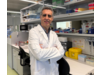
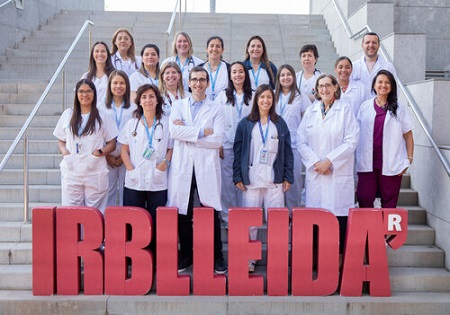
Image: The ERLAB research group at IRBLleida