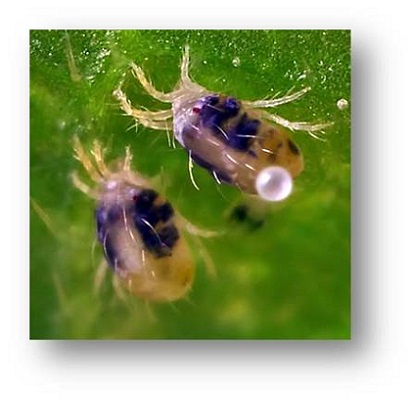
In this work, we characterized a new key player in the response of Arabidopsis against the two-spotted spider mite Tetranychus urticae, the MATI (Mite Attack Triggered Immunity) gene. This gene was differentially induced in resistant Bla-2 strain relative to susceptible Kon Arabidopsis accessions after mite attack, suggesting a potential role in the control of spider mites.
To study the MATI gene function, it has been performed a deep molecular characterization of the gene combined with feeding bioassays using modified Arabidopsis lines and phytophagous arthropods. The MATI gene belongs to a new gene family that had not been previously characterized. Biotic assays showed that it confers a high tolerance not only to T. urticae, but also to the chewing lepidopteran Spodoptera exigua. Biochemical analyses suggest that MATI encodes a protein involved in the accumulation of reducing agents upon herbivore attack to control plant redox homeostasis avoiding oxidative damage and cell death.
Besides, molecular analyses demonstrated that MATI is involved in the modulation of different hormonal signalling pathways, affecting the expression of genes involved in biosynthesis and signalling of the jasmonic acid and salicylic acid hormones. The fact that MATI is also involved in defence through the modulation of the levels of photosynthetic pigments highlights the potential of MATI proteins to be exploited as biotechnological tools for pest control.

La mejor actitud que podemos adoptar es la de trat...

The research team observed changes in head circumf...

AtCDF3 gene induced greater production of sugars a...

En nuestro post hablamos sobre este interesante tipo de célula del...

Telum Therapeutics, a biotechnology company leveraging proprietary met...