Each year, on October 9th, Nanotechnology Day is celebrated, a discipline dedicated to understanding and utilizing matter at a nanometric scale for purposes such as industrial or medical applications. Nanotechnology plays a fundamental role in many research lines developed at the Institute for Advanced Chemistry of Catalonia (IQAC-CSIC).
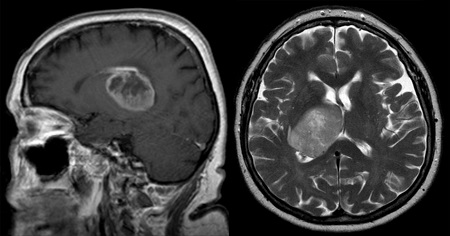
One of the standout projects in this area is the ReachGlio project, which focuses on improving drug delivery designed to slow the growth of glioblastomas using multifunctional nanomedicines. “Our goal is to propose one or more clinical trials in patients with glioblastoma using nanomedicines that can efficiently reach the brain and have antitumor activity,” explains Ibane Abasolo, the project’s principal investigator.
ReachGlio is part of the TRANSCAN 3 program, involving seven European entities, including two Spanish institutions: the Instituto de Salud Carlos III (ISCIII) and the Biomedical Research Networking Center in Bioengineering, Biomaterials, and Nanomedicine (CIBER-BBN). The Institute for Advanced Chemistry of Catalonia (IQAC-CSIC) participates through the CIBER-BBN groups led by researchers Miriam Royo and Ibane Abasolo.
Glioblastomas are among the most aggressive tumors due to their location within the brain and their ability to invade surrounding tissue. Additionally, they are highly heterogeneous tumors. All of this explains why the prognosis for patients with this type of tumor remains very poor, with no curative therapy options available.
“One of the main challenges for drugs designed to slow the growth of glioblastomas is how difficult it is for them to effectively reach the brain and distribute homogeneously within such a diverse tumor,” explains Miriam Royo, researcher of the project.
To overcome this obstacle, the current project proposes the use of nanoparticles that incorporate existing drugs, which, although they have already proven capable of slowing tumor cells, have difficulty accessing the brain. These nanoparticles, specifically polymeric micelles, have small peptide sequences on their surface that act as targeting molecules. These peptides help the nanoparticles cross the blood-brain barrier, between the blood vessels and the brain, and once inside the brain, they guide them towards the tumor cells.
During the project, a drug (NGR-TNF) will also be tested, which makes the blood-brain barrier more permeable, in combination with antitumor treatments or the nanomedicines being developed. “This specific part is planned to be tested at the veterinary level in dogs that already suffer from spontaneous brain tumors, so we hope the project’s results can quickly reach glioblastoma patients,” adds Ibane Abasolo.

La mejor actitud que podemos adoptar es la de trat...

The research team observed changes in head circumf...
AtCDF3 gene induced greater production of sugars a...
En nuestro post hablamos sobre este interesante tipo de célula del...

Telum Therapeutics, a biotechnology company leveraging proprietary met...